The Pacific Tuna Dilemma
Tuna represents the backbone of many Pacific island economies, a cultural treasure, and a resource whose management carries significant implications for millions of people. The Western and Central Pacific Ocean (WCPO) produces more than half of the world's tuna supply, with nations like Kiribati and other Pacific Island Countries (PICs) relying heavily on this pelagic species for their economic well-being.
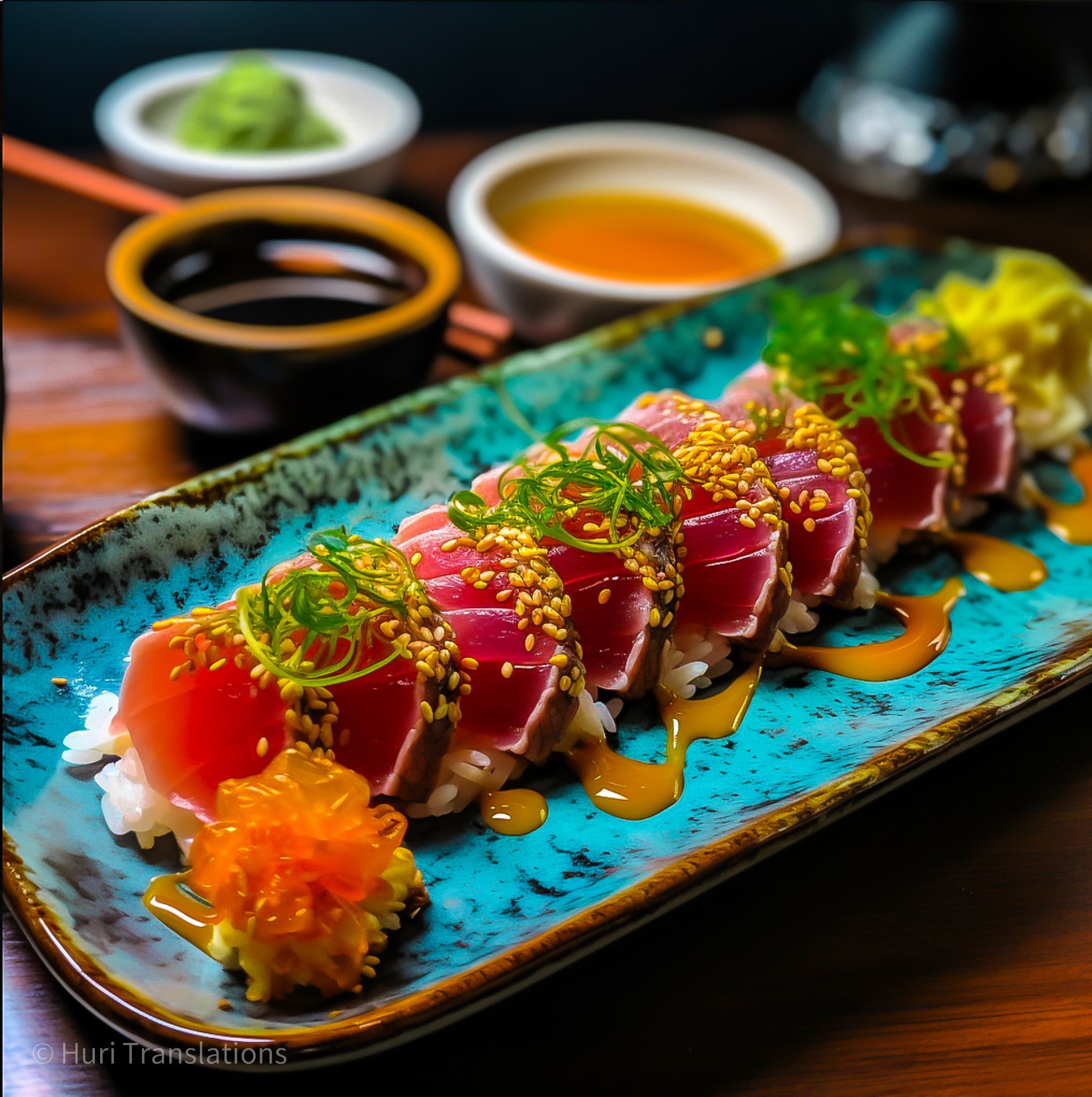
"The 2022 global tuna trade was valued at $42.63 billion and is projected to reach $52.85 billion by 2028"
Tuna represents a significant economic pillar for many Pacific nations. In Kiribati, fishing licenses granted to foreign vessels account for approximately 70% of fiscal revenues. The Vessel Day Scheme (VDS), implemented through the Parties to the Nauru Agreement (PNA), has allowed Pacific nations to create scarcity, improve fishing efficiency, and ensure more sustainable aquatic resource management.
However, as the old adage goes, "don't put all your eggs in one basket". An over-reliance on tuna fisheries has created vulnerabilities for these island nations. For islands like the Kiribati, Tokelau, Tūvalu, the Tuāmotu, etc. which have limited land area consisting mostly of alkaline coral with high porosity and lack of surface water, diversification options are scarce. In Kiribati, their agricultural products are limited to coconut, breadfruit, and a few other crops, with only coconut and its derivatives accounting for a noticeable portion of export commodities.
In light of these limitations, many Pacific Island nations are exploring the concept of a circular blue economy: An economic model that integrates environmental and economic principles. When properly managed, this approach can increase productivity, create jobs, improve resource efficiency, and preserve marine biodiversity. For instance, atoll economies like the Kiribati could benefit from developing sustainable coastal tourism, exploring hydrogen as a green energy source, and implementing better waste management systems.
On the contrary, the French Pacific territories face a different set of challenges. France's deep-sea strategy has often disregarded the autonomy of its Pacific territories, despite their institutional independence. This disconnect is evident in the lack of recognition of indigenous voices in maritime matters. As Pierre-Yves Le Meur and Valelia Muni Toke note in their recent research, the campaigns carried out by the French government in Futuna waters reflected "a political economy of science that marginalized Pacific representation and knowledge of the oceanscapes".
Moreover, the language surrounding ocean governance often contradicts Oceanian perspectives. The Western concept of the deep-sea implies separation between land and sea, deep-sea versus coastal sea, and sea versus seabed. These divisions run counter to the holistic Oceanian vision of a continuum that includes land, sea, air, and sky, all populated by human and non-human actors. In Kanak cultural vision from Kanaky, the ocean harbors the souls of the dead in specific places that form a sacred path. This concept exists as legitimate governance heritage rather than mere folklore, as sacred places constitute cultural assets acknowledged across all governance levels.
Additionally, linguistic differences reflect wider conceptual divides. Pacific navigators developed oceanic knowledge involving a dynamic topography composed of moving and sometimes living "seamarks". This stands as a stark contrast to the Western notion of fixed cartography. When Jean-Yves Poëdi, a customary senator from New Caledonia, states "we don't question nature, we listen to it, we feel it", he expresses an epistemological position that differs fundamentally from Western scientific approaches.
In the global tuna market, competition is fierce and growing stronger. The 2022 global tuna trade was valued at $42.63 billion and is projected to reach $52.85 billion by 2028. Thailand, Taiwan, and Spain dominate in terms of quantity, while Thailand, Spain, and Ecuador lead in value, collectively handling 40% of world trade. Fresh tuna ($672 million), frozen fillets ($1650 million), whole frozen fish ($4116 million), and prepared and packaged products ($6765 million) constitute the main categories of trade.
Furthermore, the global tuna market exhibits interesting seasonal patterns. In Japan, the world's largest sashimi market, consumption increases during cultural events like 花見 (Hanami, cherry blossom festivals) in March/April, 黄金週間 (Ōgon Shūkan, Golden Week) in May, school holidays in July/August, and New Year celebrations in December/January. Japanese consumer preferences have evolved from fresh whole tuna to frozen fillets for convenience as cultural patterns influence market dynamics.
The management of tuna resources involves complex tradeoffs between economic benefits and environmental conservation. In Kiribati's case, the government's decision to terminate the no-take zone and re-open the Phoenix Islands Protected Area (PIPA) to commercial fishing in 2021 created significant debate. While the government emphasized holistic options for marine protection and economic diversification to uplift the lives of all i-Kiribati, this decision may boost short-term revenues at the potential expense of long-term ecosystem health. Similarly, the decision to increase catch quotas in the Palau National Marine Sanctuary in 2024 had locals raise eyebrows. The recent MOU signed at the 2025 World Ocean Summit between Palau and Conservation International is meant to strengthen Palau's efforts in building a resilient island economy based on marine conservation and sustainable fisheries, while reaffirming their shared vision for preserving ocean health that benefits both people and nature.
From another angle, innovative value chain development offers potential solutions. Six distinct coastal value chains exist in the PIC context: beche-de-mer, ornamental black pearls and Trochus shell, fresh fish for domestic markets, reef fish exports, export of live lobsters, and aquarium fish products. High-priority targets for development include beche-de-mer, coastal fish for domestic markets, export of live reef fish, and aquarium products due to their broad range of value addition and development options.
At the end of the day, any discussion of tuna in the Pacific must recognize the delicate balance between exploitation and conservation. The blue economy concept offers promising avenues for diversification, but implementation faces challenges specific to each island nation's context. For French territories like New Caledonia, French Polynesia, and Wallis and Futuna, the colonial legacy complicates governance structures and often marginalizes indigenous knowledge systems.
Tuna embodies cultural values, economic lifelines, and governance challenges throughout the Pacific region. As Pacific Island nations tend to competing priorities of economic development and resource conservation, they must balance immediate needs with long-term sustainability. The circular blue economy offers potential pathways forward, but success will require honoring indigenous knowledge systems, developing appropriate value chains, and implementing sustainable management practices that respect human needs and ocean ecosystems.

Huri Translations
Tel. +689 89 205 483
[email protected]
PO BOX 365 Maharepa
98728 Mo'orea
French Polynesia
N°TAHITI 876649


Social