
AI and Sustainable farming in the Pacific Islands
In the face of intensifying climate change impacts, agriculture across the Pacific Islands confronts mounting pressures. Rising sea levels, shifting precipitation patterns, and extreme weather events directly threaten food security and economic stability in these vulnerable island ecosystems. However, targeted applications of artificial intelligence offer promising pathways to enhance agricultural resilience and sustainability in our region.
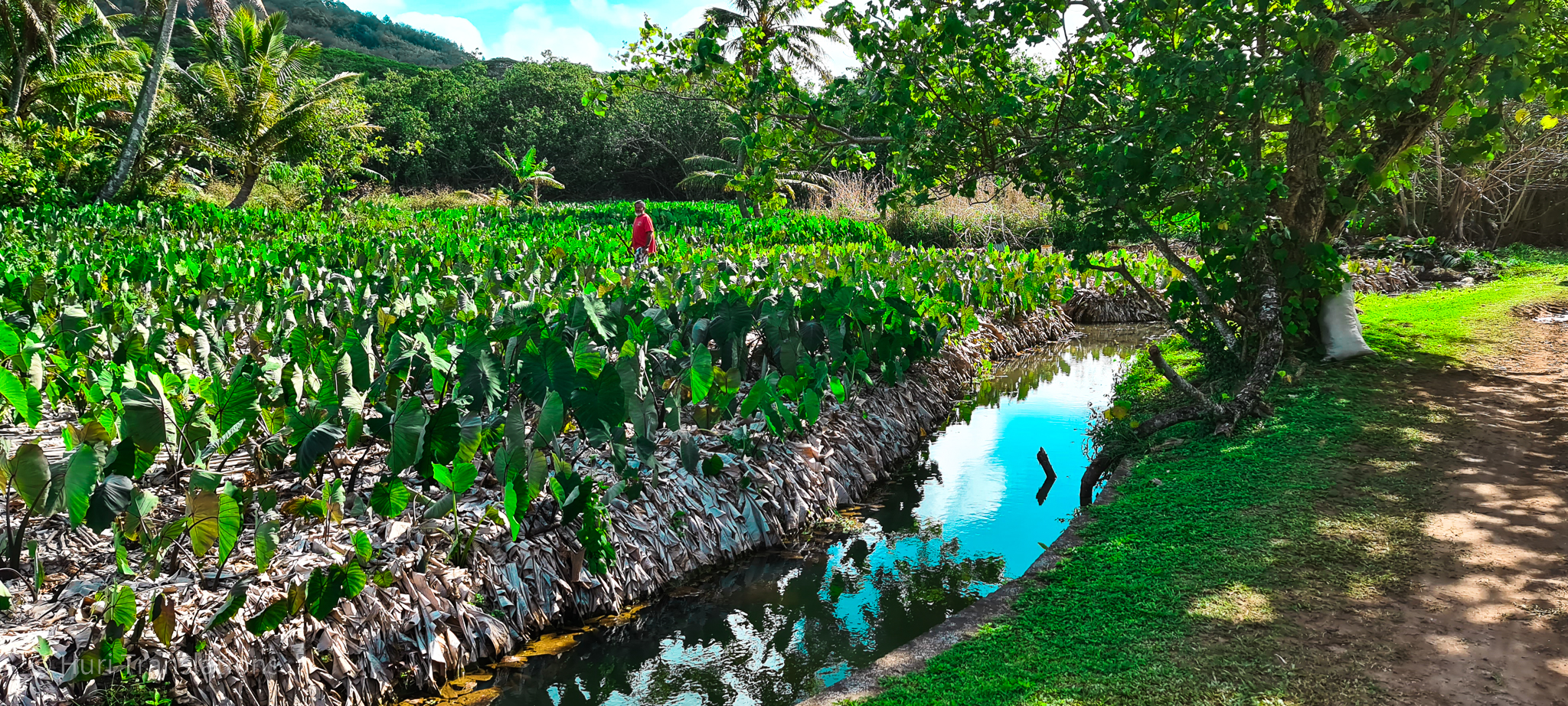
"identify plant diseases through image recognition could provide immediate diagnostic"
Pacific Island nations face serious agricultural challenges due to their limited land and water resources, exposure to extreme weather events, and vulnerability to saltwater intrusion. Traditional farming methods, while culturally significant, need additional tools to make for these mounting pressures. Digital transformation in agriculture can be tailored specifically to address the needs of our communities.
Pacific Language Movement Timeline
Weather pattern changes significantly affect crop yields and food security across the islands. Events that might have minor impacts on larger landmasses can devastate entire growing seasons on smaller islands. This vulnerability necessitates innovative approaches to agricultural management that can anticipate and adapt to changing climatic conditions.
Machine learning models trained on historical climate and agricultural data can predict optimal planting times, anticipate pest outbreaks, and suggest crop varieties that will perform well under projected conditions. For example, these systems might analyze seasonal rainfall patterns to determine ideal planting windows for taro, yam and sweet potato, some staple crops in many Pacific Island communities.
Precision agriculture techniques, enhanced by AI, can be adapted to suit the small-scale farming prevalent in Pacific Island nations. Despite often being associated with large industrial operations, these technologies can be scaled down and customized for smaller plots.
IoT sensors compatible with LoRaWAN networks is one practical solution for Pacific Island farms. These low-power, long-range networks are well-suited for island geographies and can function with minimal infrastructure. Sensors measuring soil moisture, temperature, and nutrient levels can transmit data to central systems where AI algorithms analyze the information and provide recommendations.
Run-of-the-mill companies now offer economical sensor options that could be deployed in community farming initiatives, while more customized sensors from top-of-the-line manufacturers provide higher precision for critical applications like water management, which is a key concern for many Pacific Islands facing freshwater limitations.
AI-driven early warning systems are essential for agricultural resilience in regions prone to extreme weather events. These systems integrate data from multiple sources, including weather stations and satellite imagery, to provide timely alerts to farmers through mobile applications.
The implementation of such systems in the Pacific Island context could significantly reduce crop losses due to storms, floods, or droughts. By receiving advanced notice of impending weather events, farmers can take protective measures such as adjusting irrigation schedules, reinforcing structures, or harvesting crops earlier.
The successful integration of AI solutions in Pacific Island agriculture however requires some adaptation to local contexts. Several factors are essential for acceptance and effectiveness:
Technologies must be adapted to suit the specific crops, growing conditions, and farming practices of our Pacific Island communities. This might involve adjusting sensors to monitor the health of crops or training AI models on local agricultural data.
The integration of traditional knowledge with AI systems can create more relevant and acceptable solutions. For instance, prediction models could incorporate traditional environmental indicators that Pacific Island farmers have used for generations to anticipate weather patterns.
While cost considerations are evident for small-scale farmers in Pacific Island economies, low-cost sensors, shared technology resources, and community-based implementation models can make AI solutions more accessible.
Also, energy requirements must align with island realities, which might include limited or unreliable grid electricity as we have seen in places like Sāmoa, Guåhan, Raʻiātea, Viti Levu, etc. or fuel-dependent islands for machineries and equipment such as in Rēkohu (Chatham Islands). Solar-powered sensors and low-energy communication networks like LoRaWAN minimize these constraints.
And then user interfaces should be intuitive and, when possible, available in local Pacific languages to ensure farmers can easily access and act on the information provided. This is where specialized language services become essential.
Our company has noticed an increasing trend among farming businesses in the Pacific region seeking translation services for technical documentation following issues in communication with staff and partners. User guides for agricultural and agro-industrial technologies, safety guidelines for field equipment, and training materials for AI-powered monitoring systems need translation into Pacific Island languages to facilitate adoption and information-sharing.
This growing demand reflects a recognition that technology acceptance and proper implementation do depend on clear communication strategies. When farmers can access information in their native language, they engage more confidently with new technologies, which thus leads to better outcomes and more sustainable practices.
Now, several AI applications show particular promise for Pacific Island agriculture:
AI-powered mobile applications that identify plant diseases through image recognition could provide immediate diagnostic support to farmers, similar to telemedicine. A farmer in Mangaia, Cook Islands, for instance, should be able to photograph a diseased leaf of Mamio (a fine variety of small taro) and receive instant identification and treatment recommendations in the Mangaian language.
Water conservation is critical on many Pacific Islands with limited freshwater resources. AI systems that analyze soil moisture data from field sensors can optimize irrigation schedules to ensure crops receive adequate water while minimizing waste. Such systems could be particularly valuable on atolls and smaller islands where freshwater is scarce and increasingly threatened by saltwater intrusion.
AI can analyze climate projections alongside soil data to recommend crop varieties and cultivation practices that will perform well under changing conditions. For Pacific Island farmers facing shifts in growing seasons and increases in extreme weather events, these recommendations could greatly improve food security and livelihoods.
Several factors could facilitate the adoption of AI in Pacific Island agriculture. Financial incentives and subsidies can help overcome the initial cost barriers associated with adopting new technologies. Government programs that provide grants or low-interest loans for technology adoption could accelerate implementation across island communities.
Public-private partnerships that bring together government agencies, technology providers, and farming communities can create sustainable implementation models. These collaborations might involve agricultural extension services partnering with technology companies to provide training and support to farmers.
Investment in technical education and capacity building ensures that local communities can maintain and adapt technologies to meet evolving needs. Programs that train young people in agricultural technology could create new economic opportunities.
Machine learning models trained on historical climate and agricultural data can predict optimal planting times, anticipate pest outbreaks, and suggest crop varieties that will perform well under projected conditions. For example, these systems might analyze seasonal rainfall patterns to determine ideal planting windows for taro, yam and sweet potato, some staple crops in many Pacific Island communities.
Precision agriculture techniques, enhanced by AI, can be adapted to suit the small-scale farming prevalent in Pacific Island nations. Despite often being associated with large industrial operations, these technologies can be scaled down and customized for smaller plots.
IoT sensors compatible with LoRaWAN networks is one practical solution for Pacific Island farms. These low-power, long-range networks are well-suited for island geographies and can function with minimal infrastructure. Sensors measuring soil moisture, temperature, and nutrient levels can transmit data to central systems where AI algorithms analyze the information and provide recommendations.
Run-of-the-mill companies now offer economical sensor options that could be deployed in community farming initiatives, while more customized sensors from top-of-the-line manufacturers provide higher precision for critical applications like water management, which is a key concern for many Pacific Islands facing freshwater limitations.
AI-driven early warning systems are essential for agricultural resilience in regions prone to extreme weather events. These systems integrate data from multiple sources, including weather stations and satellite imagery, to provide timely alerts to farmers through mobile applications.
The implementation of such systems in the Pacific Island context could significantly reduce crop losses due to storms, floods, or droughts. By receiving advanced notice of impending weather events, farmers can take protective measures such as adjusting irrigation schedules, reinforcing structures, or harvesting crops earlier.
The successful integration of AI solutions in Pacific Island agriculture however requires some adaptation to local contexts. Several factors are essential for acceptance and effectiveness:
Technologies must be adapted to suit the specific crops, growing conditions, and farming practices of our Pacific Island communities. This might involve adjusting sensors to monitor the health of crops or training AI models on local agricultural data.
The integration of traditional knowledge with AI systems can create more relevant and acceptable solutions. For instance, prediction models could incorporate traditional environmental indicators that Pacific Island farmers have used for generations to anticipate weather patterns.
While cost considerations are evident for small-scale farmers in Pacific Island economies, low-cost sensors, shared technology resources, and community-based implementation models can make AI solutions more accessible.
Also, energy requirements must align with island realities, which might include limited or unreliable grid electricity as we have seen in places like Sāmoa, Guåhan, Raʻiātea, Viti Levu, etc. or fuel-dependent islands for machineries and equipment such as in Rēkohu (Chatham Islands). Solar-powered sensors and low-energy communication networks like LoRaWAN minimize these constraints.
And then user interfaces should be intuitive and, when possible, available in local Pacific languages to ensure farmers can easily access and act on the information provided. This is where specialized language services become essential.
Our company has noticed an increasing trend among farming businesses in the Pacific region seeking translation services for technical documentation following issues in communication with staff and partners. User guides for agricultural and agro-industrial technologies, safety guidelines for field equipment, and training materials for AI-powered monitoring systems need translation into Pacific Island languages to facilitate adoption and information-sharing.
This growing demand reflects a recognition that technology acceptance and proper implementation do depend on clear communication strategies. When farmers can access information in their native language, they engage more confidently with new technologies, which thus leads to better outcomes and more sustainable practices.
Now, several AI applications show particular promise for Pacific Island agriculture:
AI-powered mobile applications that identify plant diseases through image recognition could provide immediate diagnostic support to farmers, similar to telemedicine. A farmer in Mangaia, Cook Islands, for instance, should be able to photograph a diseased leaf of Mamio (a fine variety of small taro) and receive instant identification and treatment recommendations in the Mangaian language.
Water conservation is critical on many Pacific Islands with limited freshwater resources. AI systems that analyze soil moisture data from field sensors can optimize irrigation schedules to ensure crops receive adequate water while minimizing waste. Such systems could be particularly valuable on atolls and smaller islands where freshwater is scarce and increasingly threatened by saltwater intrusion.
AI can analyze climate projections alongside soil data to recommend crop varieties and cultivation practices that will perform well under changing conditions. For Pacific Island farmers facing shifts in growing seasons and increases in extreme weather events, these recommendations could greatly improve food security and livelihoods.
Several factors could facilitate the adoption of AI in Pacific Island agriculture. Financial incentives and subsidies can help overcome the initial cost barriers associated with adopting new technologies. Government programs that provide grants or low-interest loans for technology adoption could accelerate implementation across island communities.
Public-private partnerships that bring together government agencies, technology providers, and farming communities can create sustainable implementation models. These collaborations might involve agricultural extension services partnering with technology companies to provide training and support to farmers.
Investment in technical education and capacity building ensures that local communities can maintain and adapt technologies to meet evolving needs. Programs that train young people in agricultural technology could create new economic opportunities.
The integration of AI technologies in Pacific Island agriculture can be a path toward more resilient and sustainable food systems. By combining traditional agricultural knowledge with tailored AI solutions, island communities can better adapt to climate change while preserving cultural practices and improving food security.
The approach must remain centered on the specific needs and conditions of Pacific Island communities. Rather than simply importing technologies developed for different contexts, the focus should be on co-creating solutions that address local challenges and build on local strengths.
As climate change continues to affect agricultural systems worldwide, the experiences of Pacific Island communities in adapting with the help of AI and other autonomous technologies will provide solid opportunities for other regions too. These small but innovative agricultural systems might well pioneer approaches that have global relevance in our changing world.

Huri Translations
Tel. +689 89 205 483
[email protected]
PO BOX 365 Maharepa
98728 Mo'orea
French Polynesia
N°TAHITI 876649


Social



Pacific Language Movement Timeline
${period.title}
${period.description}
`;
wrapper.appendChild(periodElement);
});
function togglePeriod(id) {
const content = document.getElementById(`period-${id}`);
content.classList.toggle('active');
}
function handleDragStart(e) {
isDragging = true;
timeline.style.cursor = 'grabbing';
startX = e.type === 'mousedown' ? e.pageX : e.touches[0].pageX;
const transformMatrix = window.getComputedStyle(wrapper).transform;
currentTranslate = parseInt(transformMatrix.split(',')[4]) || 0;
}
function handleDragMove(e) {
if (!isDragging) return;
e.preventDefault();
const x = e.type === 'mousemove' ? e.pageX : e.touches[0].pageX;
const walk = x - startX;
const maxTranslate = -(wrapper.offsetWidth - timeline.offsetWidth);
let newTranslate = currentTranslate + walk;
if (newTranslate > 0) newTranslate = 0;
if (newTranslate < maxTranslate) newTranslate = maxTranslate;
wrapper.style.transform = `translateX(${newTranslate}px)`;
}
function handleDragEnd() {
isDragging = false;
timeline.style.cursor = 'grab';
}
// Mouse Events
timeline.addEventListener('mousedown', handleDragStart);
window.addEventListener('mousemove', handleDragMove);
window.addEventListener('mouseup', handleDragEnd);
// Touch Events
timeline.addEventListener('touchstart', handleDragStart);
timeline.addEventListener('touchmove', handleDragMove);
timeline.addEventListener('touchend', handleDragEnd);