Translation Challenges and Solutions in a Multilingual World
In today's interconnected digital world, language diversity remains a cultural treasure and a practical challenge. In our genetically-ingrained focus on Pacific Island languages, translating technical documentation into Micronesian languages like Carolinian, Chuukese, Marshallese, Palauan, CHamorro or Gilbertese is sometimes a tough nut to crack as we experience the realities on language barriers and translation gaps.
"Determining whether to translate terms literally, adapt them culturally, or borrow them directly"
The dominance of English in scientific and technical communication is a relatively recent phenomenon, dating back only about 400 years. Throughout history, the primary language of science has cycled through Chinese, Sumerian, Egyptian, Persian, Greek, Latin, Arabic, German, and French. English began its rise alongside Great Britain's colonial expansion and later gained momentum with the increasing military, economic, and technological influence of the United States.
Today, approximately 98% of peer-reviewed scientific publishing occurs in English. While having a common language facilitates international communication and trade, it creates a centralized repository for information but also creates significant barriers. The majority of researchers worldwide must become proficient in an additional language before engaging with the global academic community. This requirement disproportionately affects those from countries with lower economic resources and whose primary languages differ significantly from English.
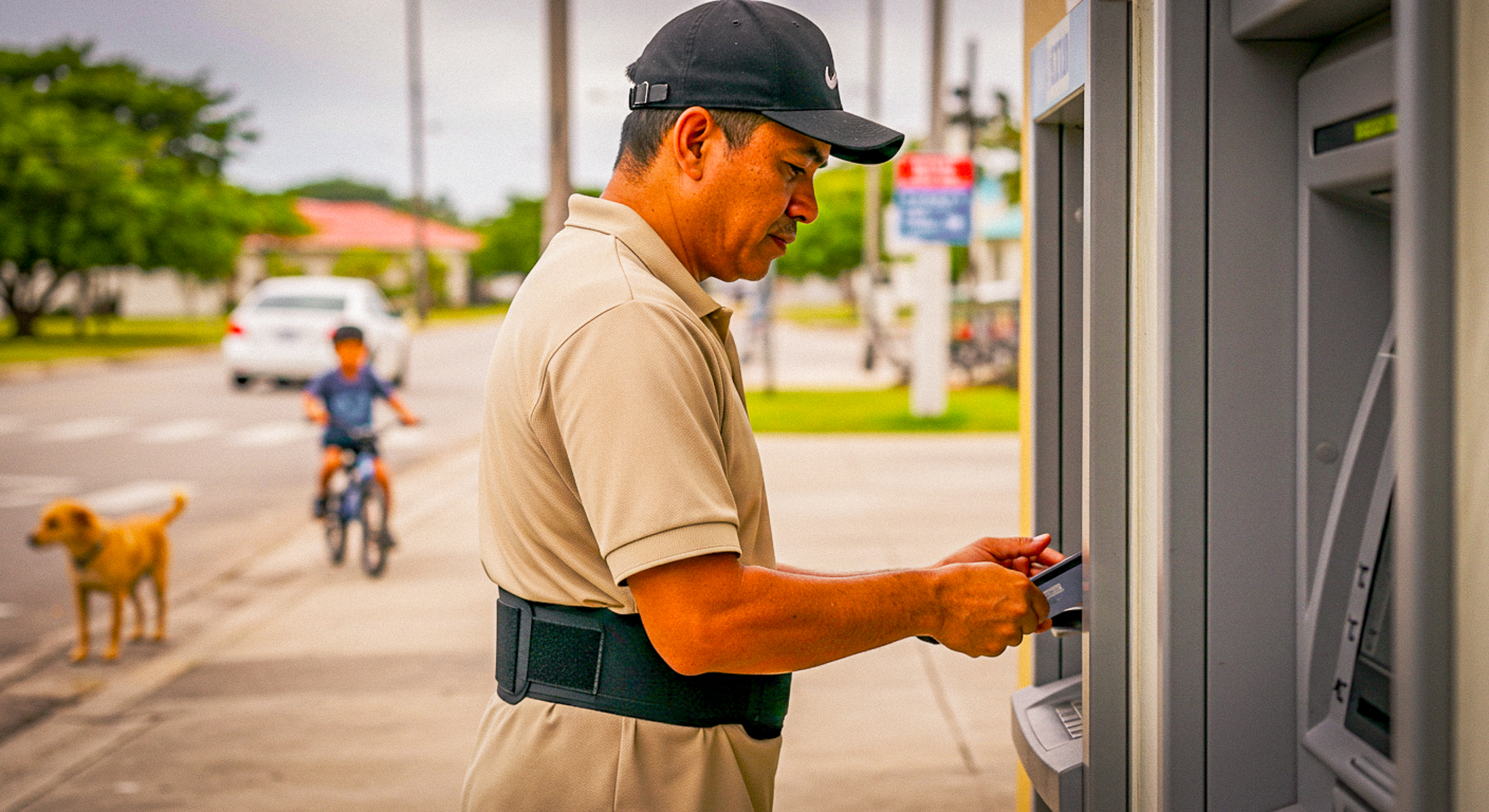
Language barriers extend beyond academia into technical documentation, such as UIs (User Interfaces), user manuals, and other documentation on everyday modern technology. Recently, our teams translated an ATM interface into Carolinian and CHamorro and had to wait, as is often the case, for academics to provide vetted lexicon tables for specifc terminology related to finance and banking to complete the project.
Technical language can contain specific terminology that often doesn't have direct equivalents in other languages. For oral languages that lack established writing systems, like many minority languages in China, creating technical translations becomes even more difficult. The Mosuo Chinese-English-French Dictionary project exemplifies the painstaking work involved: collecting audio recordings, establishing transcription systems, and building terminology from scratch.
Our work with Pacific Island languages benefits from the fact that most have established writing systems and some existing dictionaries and glossaries. However, technical vocabulary for modern technology often requires coining new terms or borrowing from neighbor languages or from more widely spoken languages.
The translation of technical terms poses several specific challenges: Determining whether to translate terms literally, adapt them culturally, or borrow them directly while maintaining consistency, addressing concepts or phonemes that may not exist in the target language context, etc.
So, advances in machine translation provide solutions to some of these challenges. Back then, rule-based machine translation used programmed linguistic rules and large dictionaries, with limited success. Statistical machine translation then emerged, calculating the probability that phrases should be translated in certain ways based on previously translated texts.
But since 2016, when we participated in our first major Machine Translation conference in Austin, Texas, our translation company took a turning point as neural machine translation was making a significant leap forward in quality. The year that followed, the paper "Attention is All you Need" presented the transformer architecture. And so we embarked on creating NMT (Neural Machine Translation) systems that required using the best of our training data accumulated since 2008, systems which have evolved into resource-intensive LLM (Large Language Models) ones for our Pacific Island languages.
Now, this approach works better for widely spoken languages with abundant, top quality data, but struggles with languages that have a lot less resources, such as Kwamera, Kwényi, Kapingamarangi, Mangaian, Mangarevan, etc. For technical content in languages like Yapese, machine translation remains limited. The specialized terminology of fields like computer interfaces lacks the training volumes needed for accurate machine translation. There is just not enough data to start with.
That said, several practical approaches can improve technical translation outcomes:
• Plain Language Writing: Texts that use clear, simple language are easier to translate accurately. Technical documentation benefits from shorter sentences, active voice, consistent terminology, minimal abbreviations, and explicit connectors between ideas. When writing technical content for products intended for international markets, authors should avoid certain grammatical styles, such as long strings of modifiers and include optional relative pronouns (that, which) to clarify relationships. That is when companies need localization services for their products.
• Collaborative Translation: Bringing together technical experts, linguists, and native speakers. When translating the ATM interface into Carolinian, our teams of technical experts needed to understand the ATM functionality and validate terms and ensure clarity. For complex projects, our clients know that we will need illustrations for each UI string, along with provisions for forward translation options, reconciliation, back-translation and comments.
• Building Terminology Resources: Creating multilingual glossaries of specialized terminology help us maintain consistency.
• Translation Memory Systems: These tools allow us to store previously translated segments, refine the data, mark terms with tags, etc. For technical documentation with repetitive content, we are thankful these systems improve the efficiency and consistency of our work.
The compilation of so-called "low-resource language" dictionaries serves multiple purposes: facilitating communication, preserving cultural heritage, and supporting language revitalization. For languages with fewer speakers, such tols can increase their chance of survival.
Some research suggests that constraining diverse perspectives to fit within the structure and vocabulary of a single language impoverishes discourse and perspectives. Different languages shape how people perceive color, understand events, and describe relationships between ideas. When we limit technical communication to a single language, we also limit innovation and problem-solving approaches.
A promising method for the future involves creating secondary language hubs that could act as networking communities and knowledge centers for academia to work in, which will in turn become a reference for the language service providers that we are. The evolution of machine translation technology, particularly LLMs, is our lighthouse to assist our teams in our translation work. However, the technology still requires substantial refined training data, which remains scarce for some of our Pacific Island languages. There is just not enough data to start with.
As technology continues to advance, the goal remains to make information accessible beyond language barriers while preserving the richness and diversity of human expression.
Language barriers extend beyond academia into technical documentation, such as UIs (User Interfaces), user manuals, and other documentation on everyday modern technology. Recently, our teams translated an ATM interface into Carolinian and CHamorro and had to wait, as is often the case, for academics to provide vetted lexicon tables for specifc terminology related to finance and banking to complete the project.
Technical language can contain specific terminology that often doesn't have direct equivalents in other languages. For oral languages that lack established writing systems, like many minority languages in China, creating technical translations becomes even more difficult. The Mosuo Chinese-English-French Dictionary project exemplifies the painstaking work involved: collecting audio recordings, establishing transcription systems, and building terminology from scratch.
Our work with Pacific Island languages benefits from the fact that most have established writing systems and some existing dictionaries and glossaries. However, technical vocabulary for modern technology often requires coining new terms or borrowing from neighbor languages or from more widely spoken languages.
The translation of technical terms poses several specific challenges: Determining whether to translate terms literally, adapt them culturally, or borrow them directly while maintaining consistency, addressing concepts or phonemes that may not exist in the target language context, etc.
So, advances in machine translation provide solutions to some of these challenges. Back then, rule-based machine translation used programmed linguistic rules and large dictionaries, with limited success. Statistical machine translation then emerged, calculating the probability that phrases should be translated in certain ways based on previously translated texts.
But since 2016, when we participated in our first major Machine Translation conference in Austin, Texas, our translation company took a turning point as neural machine translation was making a significant leap forward in quality. The year that followed, the paper "Attention is All you Need" presented the transformer architecture. And so we embarked on creating NMT (Neural Machine Translation) systems that required using the best of our training data accumulated since 2008, systems which have evolved into resource-intensive LLM (Large Language Models) ones for our Pacific Island languages.
Now, this approach works better for widely spoken languages with abundant, top quality data, but struggles with languages that have a lot less resources, such as Kwamera, Kwényi, Kapingamarangi, Mangaian, Mangarevan, etc. For technical content in languages like Yapese, machine translation remains limited. The specialized terminology of fields like computer interfaces lacks the training volumes needed for accurate machine translation. There is just not enough data to start with.
That said, several practical approaches can improve technical translation outcomes:
• Plain Language Writing: Texts that use clear, simple language are easier to translate accurately. Technical documentation benefits from shorter sentences, active voice, consistent terminology, minimal abbreviations, and explicit connectors between ideas. When writing technical content for products intended for international markets, authors should avoid certain grammatical styles, such as long strings of modifiers and include optional relative pronouns (that, which) to clarify relationships. That is when companies need localization services for their products.
• Collaborative Translation: Bringing together technical experts, linguists, and native speakers. When translating the ATM interface into Carolinian, our teams of technical experts needed to understand the ATM functionality and validate terms and ensure clarity. For complex projects, our clients know that we will need illustrations for each UI string, along with provisions for forward translation options, reconciliation, back-translation and comments.
• Building Terminology Resources: Creating multilingual glossaries of specialized terminology help us maintain consistency.
• Translation Memory Systems: These tools allow us to store previously translated segments, refine the data, mark terms with tags, etc. For technical documentation with repetitive content, we are thankful these systems improve the efficiency and consistency of our work.
The compilation of so-called "low-resource language" dictionaries serves multiple purposes: facilitating communication, preserving cultural heritage, and supporting language revitalization. For languages with fewer speakers, such tols can increase their chance of survival.
Some research suggests that constraining diverse perspectives to fit within the structure and vocabulary of a single language impoverishes discourse and perspectives. Different languages shape how people perceive color, understand events, and describe relationships between ideas. When we limit technical communication to a single language, we also limit innovation and problem-solving approaches.
A promising method for the future involves creating secondary language hubs that could act as networking communities and knowledge centers for academia to work in, which will in turn become a reference for the language service providers that we are. The evolution of machine translation technology, particularly LLMs, is our lighthouse to assist our teams in our translation work. However, the technology still requires substantial refined training data, which remains scarce for some of our Pacific Island languages. There is just not enough data to start with.
As technology continues to advance, the goal remains to make information accessible beyond language barriers while preserving the richness and diversity of human expression.

Huri Translations
Tel. +689 89 205 483
[email protected]
PO BOX 365 Maharepa
98728 Mo'orea
French Polynesia
N°TAHITI 876649


Social