Telehealth Innovation for Pacific Populations
In today's globalized world, telehealth has become an essential component of healthcare delivery systems. For island nations and indigenous communities across the Pacific, telehealth carries opportunities and hurdles in addressing healthcare needs. The integration of telemedicine, particularly for vulnerable populations like Native Hawaiians, Pacific Islanders, and Māori communities, requires thoughtful consideration of cultural, technological, and practical factors.
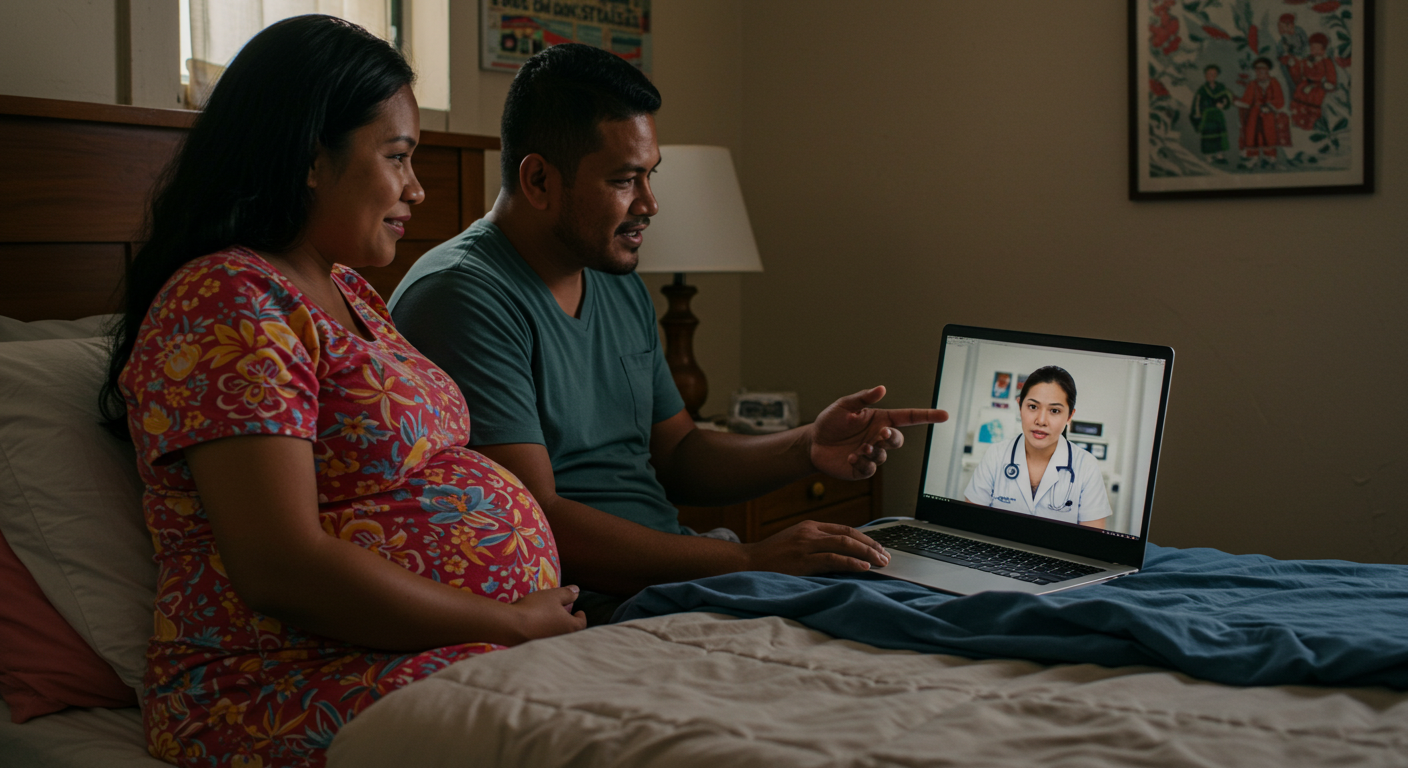
"any telehealth initiative serving Indigenous populations must be designed with cultural sensitivity"
Pacific Island countries have experienced strong growth in Internet connectivity over the past decade. In Sāmoa, for instance, Internet connectivity has significantly improved since the Tui-Sāmoa undersea fiber optic cable was deployed in April 2018,which has allowed greater transmission speeds and reliability. Studies conducted by the World Bank confirm a relationship between Internet penetration and economic growth, as they conclude that a 10 percentage point increase in fixed broadband penetration would increase GDP growth by 1.21% in developed economies and 1.38% in developing ones.
Despite these infrastructure improvements, accessibility remains a challenge. While mobile networks have statistics on coverage, the real-world experience of end users with smartphones in rural locations shows significant gaps. Testing conducted across both ʻŪpolu and Savaiʻi islands revealed areas where Internet connections are unavailable or extremely slow.
Diabetes in pregnancy (DiP) represents a specialized area where telehealth has demonstrated particular promise. In Aotearoa, DiP encompasses gestational and preexisting diabetes, which affects approximately 4.9% of pregnancies nationally. The rate of diabetes in pregnancy is increasing amongst people of South Asian, Pacific Island, and Māori ethnicities, with rates in South Auckland hospitals increasing from 3% to 12% of births between 2006 and 2019.
Managing diabetes during pregnancy presents unique challenges because there is a short timeframe for patients to adapt. Most cases of DiP are gestational diabetes, where the diagnosis is made at 24-28 weeks' gestation. This leaves limited time for patients to come to terms with their diagnosis, learn regular blood sugar testing routines, and make lifestyle modifications.
We believe any telehealth initiative serving Indigenous populations must be designed with cultural sensitivity. A scoping review of telehealth use by Indigenous populations found that cultural safety was discussed to some extent in 75% of the studies examined. The most commonly reported way to achieve cultural safety was involving Indigenous communities in the development and implementation of telehealth services.
Translating medical materials, respecting Indigenous cultural values demonstrated through the incorporation of cross-cultural health conceptualizations, traditional healing practices, language, and ceremonies all help improve cultural safety. Also, Telehealth may provide a more comfortable space for some indigenous patients to communicate with healthcare providers.
Nevertheless, there are significant barriers to telehealth adoption among Indigenous communities. Common challenges include:
• Concerns about privacy and confidentiality
Diabetes in pregnancy (DiP) represents a specialized area where telehealth has demonstrated particular promise. In Aotearoa, DiP encompasses gestational and preexisting diabetes, which affects approximately 4.9% of pregnancies nationally. The rate of diabetes in pregnancy is increasing amongst people of South Asian, Pacific Island, and Māori ethnicities, with rates in South Auckland hospitals increasing from 3% to 12% of births between 2006 and 2019.
Managing diabetes during pregnancy presents unique challenges because there is a short timeframe for patients to adapt. Most cases of DiP are gestational diabetes, where the diagnosis is made at 24-28 weeks' gestation. This leaves limited time for patients to come to terms with their diagnosis, learn regular blood sugar testing routines, and make lifestyle modifications.
We believe any telehealth initiative serving Indigenous populations must be designed with cultural sensitivity. A scoping review of telehealth use by Indigenous populations found that cultural safety was discussed to some extent in 75% of the studies examined. The most commonly reported way to achieve cultural safety was involving Indigenous communities in the development and implementation of telehealth services.
Translating medical materials, respecting Indigenous cultural values demonstrated through the incorporation of cross-cultural health conceptualizations, traditional healing practices, language, and ceremonies all help improve cultural safety. Also, Telehealth may provide a more comfortable space for some indigenous patients to communicate with healthcare providers.
Nevertheless, there are significant barriers to telehealth adoption among Indigenous communities. Common challenges include:
• Concerns about privacy and confidentiality
• Limited broadband internet availability
• Low health/digital literacy
• Difficulty building trusting relationships remotely
Additionally, telehealth access disparities disproportionately affect certain populations. Research from Washington State examined differences in telehealth use between Native Hawaiian and Pacific Islander (NHOPI) individuals compared to non-Hispanic White individuals enrolled in Medicaid. Despite NHOPI individuals having slightly lower rates of poverty, homelessness, and better area-level broadband and cellphone access, telehealth use was 7.5% lower among NHOPI individuals.
In fact, most of the difference in telemedicine use between NHOPI and non-Hispanic White groups was attributable to a clear differential effect of characteristics. This indicates that measures to diffusely address telemedicine access barriers alone, such as increasing broadband access, may be insufficient to reduce this disparity among NHOPI individuals.
In the midst of considering telehealth implementations, healthcare provider perspectives offer a lot to chew on. South Auckland healthcare providers working with diabetes in pregnancy patients emphasize four main points:
• Collaboration and working together are important for providing care
• Difficulty building trusting relationships remotely
Additionally, telehealth access disparities disproportionately affect certain populations. Research from Washington State examined differences in telehealth use between Native Hawaiian and Pacific Islander (NHOPI) individuals compared to non-Hispanic White individuals enrolled in Medicaid. Despite NHOPI individuals having slightly lower rates of poverty, homelessness, and better area-level broadband and cellphone access, telehealth use was 7.5% lower among NHOPI individuals.
In fact, most of the difference in telemedicine use between NHOPI and non-Hispanic White groups was attributable to a clear differential effect of characteristics. This indicates that measures to diffusely address telemedicine access barriers alone, such as increasing broadband access, may be insufficient to reduce this disparity among NHOPI individuals.
In the midst of considering telehealth implementations, healthcare provider perspectives offer a lot to chew on. South Auckland healthcare providers working with diabetes in pregnancy patients emphasize four main points:
• Collaboration and working together are important for providing care
• Provide documents in the mother tongue of the patient
• The need for flexibility in scheduling and individualizing care
• Implementing increased use of technology requires extra resources
Healthcare providers recognize that certain patient populations might benefit more from telehealth services than others. According to midwives, most women have children and they wait in clinics for several hours when they should not. Telehealth could improve access for patients whose main barriers to attending were time constraints related to family responsibilities.
The landscape of telehealth policy in Pacific Island nations continues to evolve. In Sāmoa, for example, the National ICT Policy 2012-2017 had five goals based on key themes of accessibility, capacity, and community. While the policy included a vision of "ICT for all", there was a notable absence of indicators specifically focused on connectivity. The policy had only one indicator related to connectivity: the proportion of the population covered by broadband networks.
However, the Sāmoa 2040 plan has since placed greater emphasis on digital connectivity. The plan recognizes that digital connectivity can stimulate business opportunities in e-commerce and e-services, increase productivity in traditional sectors like agriculture and tourism, and enable more efficient delivery of health, education, and business services. In light of these findings, several recommendations emerge for implementing telehealth services for Pacific Islander populations:
• Telehealth should supplement rather than replace face-to-face care
• First appointments should be offered face-to-face to establish rapport
• Video calling should be implemented whenever possible
• Dedicated onsite IT support for staff is essential, with top equipment available
Successful telehealth implementation for indigenous Pacific populations requires cultural sensitivity, technological investment, and flexible approaches that recognize the diverse needs of the communities. When implemented thoughtfully, telehealth has the potential to overcome barriers to care and improve health outcomes. But cutting corners in implementation, such as skipping translation of medical documents could widen existing health disparities.
• The need for flexibility in scheduling and individualizing care
• Implementing increased use of technology requires extra resources
Healthcare providers recognize that certain patient populations might benefit more from telehealth services than others. According to midwives, most women have children and they wait in clinics for several hours when they should not. Telehealth could improve access for patients whose main barriers to attending were time constraints related to family responsibilities.
The landscape of telehealth policy in Pacific Island nations continues to evolve. In Sāmoa, for example, the National ICT Policy 2012-2017 had five goals based on key themes of accessibility, capacity, and community. While the policy included a vision of "ICT for all", there was a notable absence of indicators specifically focused on connectivity. The policy had only one indicator related to connectivity: the proportion of the population covered by broadband networks.
However, the Sāmoa 2040 plan has since placed greater emphasis on digital connectivity. The plan recognizes that digital connectivity can stimulate business opportunities in e-commerce and e-services, increase productivity in traditional sectors like agriculture and tourism, and enable more efficient delivery of health, education, and business services. In light of these findings, several recommendations emerge for implementing telehealth services for Pacific Islander populations:
• Telehealth should supplement rather than replace face-to-face care
• First appointments should be offered face-to-face to establish rapport
• Video calling should be implemented whenever possible
• Dedicated onsite IT support for staff is essential, with top equipment available
Successful telehealth implementation for indigenous Pacific populations requires cultural sensitivity, technological investment, and flexible approaches that recognize the diverse needs of the communities. When implemented thoughtfully, telehealth has the potential to overcome barriers to care and improve health outcomes. But cutting corners in implementation, such as skipping translation of medical documents could widen existing health disparities.

Huri Translations
Tel. +689 89 205 483
[email protected]
PO BOX 365 Maharepa
98728 Mo'orea
French Polynesia
N°TAHITI 876649


Social