A Strategic Outlook on Pacific Islander Health Engagement
The American health sector experiences continual adjustments. For organizations that aim to form connections with Native Hawaiian and other Pacific Islander communities, specific communication methods are a subject of proper attention. This document supplies a view of these considerations.
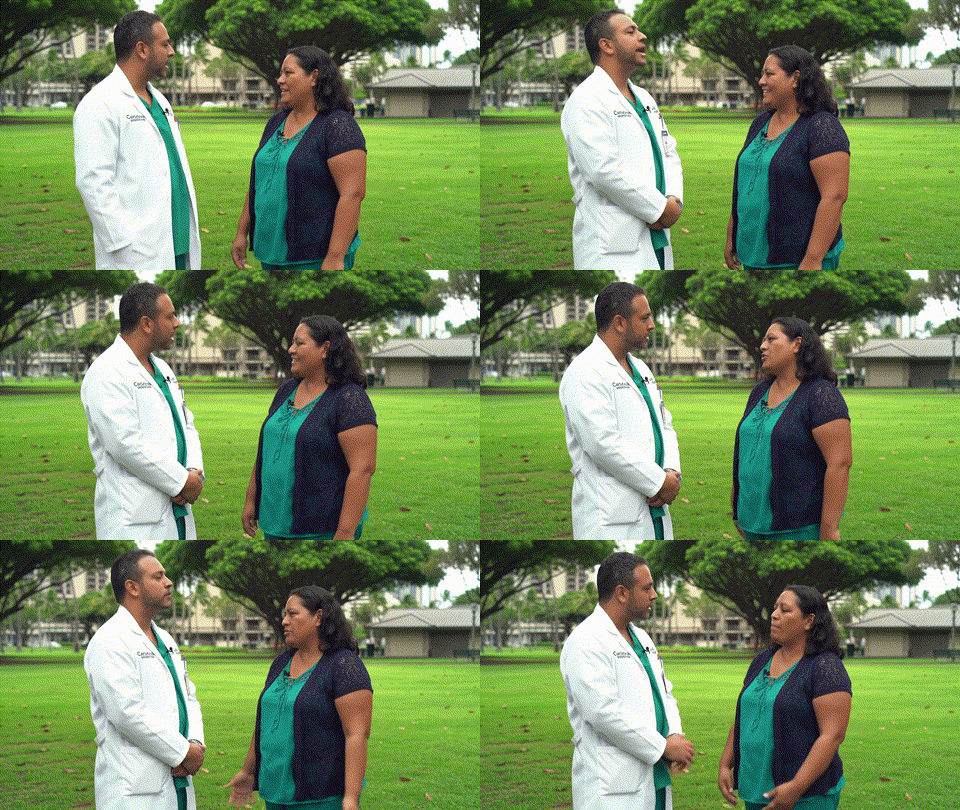
"a genuine positive mark within Native Hawaiian and other Pacific Islander communities"
I. Executive Summary
The healthcare sphere in the United States undergoes continuous adjustment. Policy considerations, such as proposals for most-favored-nation drug prices, may alter cost structures and access conditions. Within this context, Native Hawaiian and other Pacific Islander (NHOPI) communities show particular health profiles. These communities also possess a linguistic composition that calls for specialized methods of connection. For organizations that aim to aid health improvements or to introduce health-related services and products, a generic approach will prove inadequate. This document outlines key ideas for communication strategy for entities that commit to culturally astute and impactful community connection.
The healthcare sphere in the United States undergoes continuous adjustment. Policy considerations, such as proposals for most-favored-nation drug prices, may alter cost structures and access conditions. Within this context, Native Hawaiian and other Pacific Islander (NHOPI) communities show particular health profiles. These communities also possess a linguistic composition that calls for specialized methods of connection. For organizations that aim to aid health improvements or to introduce health-related services and products, a generic approach will prove inadequate. This document outlines key ideas for communication strategy for entities that commit to culturally astute and impactful community connection.
II. The Pacific Health Picture
A detailed appreciation of the health situation is a basic requirement for any organization that intends to make a positive contribution.
Key Health Areas: Data from the Office of Minority Health (OMH) identify specific conditions where focused efforts can yield good results. For example, in 2018, Native Hawaiians/Pacific Islanders were 2.5 times more likely to receive a diabetes diagnosis by comparison with the non-Hispanic white population. They were also 2.5 times more likely to die from diabetes. Also, NHOPI adults were almost four times more likely than non-Hispanic white adults to have a stroke in 2014. Chronic liver disease and certain cancers also show higher incidence rates in specific NHOPI populations. These statistics point to areas where targeted health programs, new treatments, or educational work can address pressing conditions.
The Language Situation: A highly pertinent factor for community connection is the great linguistic range within NHOPI communities. These groups speak over 100 different languages and dialects, including, Marshallese, Palauan, CHamorro, Carolinian, Chuukese, Kosraean, Pohnpeian, Yapese and Hawaiian. According to 2022 ACS estimates, 40.3% of non-Hispanic Native Hawaiians/Pacific Islanders age 5 years and older speak a language other than English at home. Of those, 11.8% report speech in English less than "very well". This fact is a direct operational item for any organization that aims for broad information dispersal.
Other Determinants and Data Points: Non-medical factors like poverty and limited access to healthcare, known as social determinants of health (SDOH), significantly shape health outcomes in NHOPI communities. Additionally, specific health data for NHOPI groups can be limited. Federal practices sometimes combine data for Asian American, Native Hawaiian, and Pacific Islander populations.
III. A Move from Information Dispersal to Impact
In a setting with such cultural breadth, standardized, one-size-fits-all communication methods will fall short. Culturally tailored and linguistically accurate health information is a primary component for:
Trust and Rapport Construction: A show of understanding of, and respect for, cultural elements and linguistic preferences is the first step toward credible relationships.
Health Literacy Improvement: Information in a person's primary language helps their ability to grasp health topics, to make informed decisions, and to manage their well-being.
Support for Treatment Plans: When individuals fully grasp medical advice, treatment protocols, and the benefits of preventative measures, their cooperation with these is more probable.
Aid for Equitable Access: The provision of information in multiple languages helps to confirm that all community members, irrespective of their English proficiency, have an equal opportunity to find health information, services, and programs.
A detailed appreciation of the health situation is a basic requirement for any organization that intends to make a positive contribution.
Key Health Areas: Data from the Office of Minority Health (OMH) identify specific conditions where focused efforts can yield good results. For example, in 2018, Native Hawaiians/Pacific Islanders were 2.5 times more likely to receive a diabetes diagnosis by comparison with the non-Hispanic white population. They were also 2.5 times more likely to die from diabetes. Also, NHOPI adults were almost four times more likely than non-Hispanic white adults to have a stroke in 2014. Chronic liver disease and certain cancers also show higher incidence rates in specific NHOPI populations. These statistics point to areas where targeted health programs, new treatments, or educational work can address pressing conditions.
The Language Situation: A highly pertinent factor for community connection is the great linguistic range within NHOPI communities. These groups speak over 100 different languages and dialects, including, Marshallese, Palauan, CHamorro, Carolinian, Chuukese, Kosraean, Pohnpeian, Yapese and Hawaiian. According to 2022 ACS estimates, 40.3% of non-Hispanic Native Hawaiians/Pacific Islanders age 5 years and older speak a language other than English at home. Of those, 11.8% report speech in English less than "very well". This fact is a direct operational item for any organization that aims for broad information dispersal.
Other Determinants and Data Points: Non-medical factors like poverty and limited access to healthcare, known as social determinants of health (SDOH), significantly shape health outcomes in NHOPI communities. Additionally, specific health data for NHOPI groups can be limited. Federal practices sometimes combine data for Asian American, Native Hawaiian, and Pacific Islander populations.
III. A Move from Information Dispersal to Impact
In a setting with such cultural breadth, standardized, one-size-fits-all communication methods will fall short. Culturally tailored and linguistically accurate health information is a primary component for:
Trust and Rapport Construction: A show of understanding of, and respect for, cultural elements and linguistic preferences is the first step toward credible relationships.
Health Literacy Improvement: Information in a person's primary language helps their ability to grasp health topics, to make informed decisions, and to manage their well-being.
Support for Treatment Plans: When individuals fully grasp medical advice, treatment protocols, and the benefits of preventative measures, their cooperation with these is more probable.
Aid for Equitable Access: The provision of information in multiple languages helps to confirm that all community members, irrespective of their English proficiency, have an equal opportunity to find health information, services, and programs.
The context of pharmaceutical price policy adjustments, such as the MFN approach, which aims to make U.S. drug prices similar to those in other developed nations, further shows the utility of adapted communication. Should such policies lead to alterations in medication costs or the introduction of new patient assistance programs, the accurate and accessible conveyance of these alterations across many language groups will be a chief factor in their usefulness to the community.
IV. A Gateway to Productive Pacific Connections
To address the communication requirements for successful work in NHOPI communities requires specialized expertise. To view linguistic and cultural adaptation support as an investment, not an expense, enables greater program efficacy and can foster true community links. A partnership approach can provide:
Linguistic Support Systems: Services for translation and localization of health materials, program information, and digital health tools into our Pacific Island languages. This work helps your message to be understood by each individual.
Cultural Acumen Consultation: Guidance to adapt your initiatives and materials so they fit with the cultural values, beliefs, and communication styles found across NHOPI communities. This work can increase acceptance and participation.
Health Literacy Advancement: Expertise in the transformation of medical and pharmaceutical information into plain, easily grasped content that is accessible to community members with different levels of health literacy and across different language backgrounds.
Aid for Community-Based Study: Assistance to design and to implement communication strategies for study initiatives that are culturally sensitive and that yield more accurate qualitative data from within these communities.
IV. A Gateway to Productive Pacific Connections
To address the communication requirements for successful work in NHOPI communities requires specialized expertise. To view linguistic and cultural adaptation support as an investment, not an expense, enables greater program efficacy and can foster true community links. A partnership approach can provide:
Linguistic Support Systems: Services for translation and localization of health materials, program information, and digital health tools into our Pacific Island languages. This work helps your message to be understood by each individual.
Cultural Acumen Consultation: Guidance to adapt your initiatives and materials so they fit with the cultural values, beliefs, and communication styles found across NHOPI communities. This work can increase acceptance and participation.
Health Literacy Advancement: Expertise in the transformation of medical and pharmaceutical information into plain, easily grasped content that is accessible to community members with different levels of health literacy and across different language backgrounds.
Aid for Community-Based Study: Assistance to design and to implement communication strategies for study initiatives that are culturally sensitive and that yield more accurate qualitative data from within these communities.
V. A Path to Collaborative Success
Organizations that prioritize culturally intelligent and linguistically effective communication plans are best positioned to achieve their objectives and to make a genuine positive mark within Native Hawaiian and other Pacific Islander communities. The way to successful work in this specific healthcare landscape is built with understanding, respect, and a commitment to use the language of the people with whom you wish to connect. A collaboration with specialists in cross-cultural communication can supply the necessary support to approach this terrain. Such a step can transform communication hurdles into avenues for stronger connections and better health outcomes.
Organizations that prioritize culturally intelligent and linguistically effective communication plans are best positioned to achieve their objectives and to make a genuine positive mark within Native Hawaiian and other Pacific Islander communities. The way to successful work in this specific healthcare landscape is built with understanding, respect, and a commitment to use the language of the people with whom you wish to connect. A collaboration with specialists in cross-cultural communication can supply the necessary support to approach this terrain. Such a step can transform communication hurdles into avenues for stronger connections and better health outcomes.

Huri Translations
Tel. +689 89 205 483
[email protected]
PO BOX 365 Maharepa
98728 Mo'orea
French Polynesia
N°TAHITI 876649


Social