How Pacific Islands Redefine Maritime Security in the Indo-Pacific
The maritime domain speaks volumes about how nations view themselves. The Philippines and Vietnam focus intensely on territorial disputes in the South China Sea. Australia worries about illegal fishing in its northern waters. Fiji tracks climate change impacts on its reefs. Each priority reflects a distinct maritime identity.
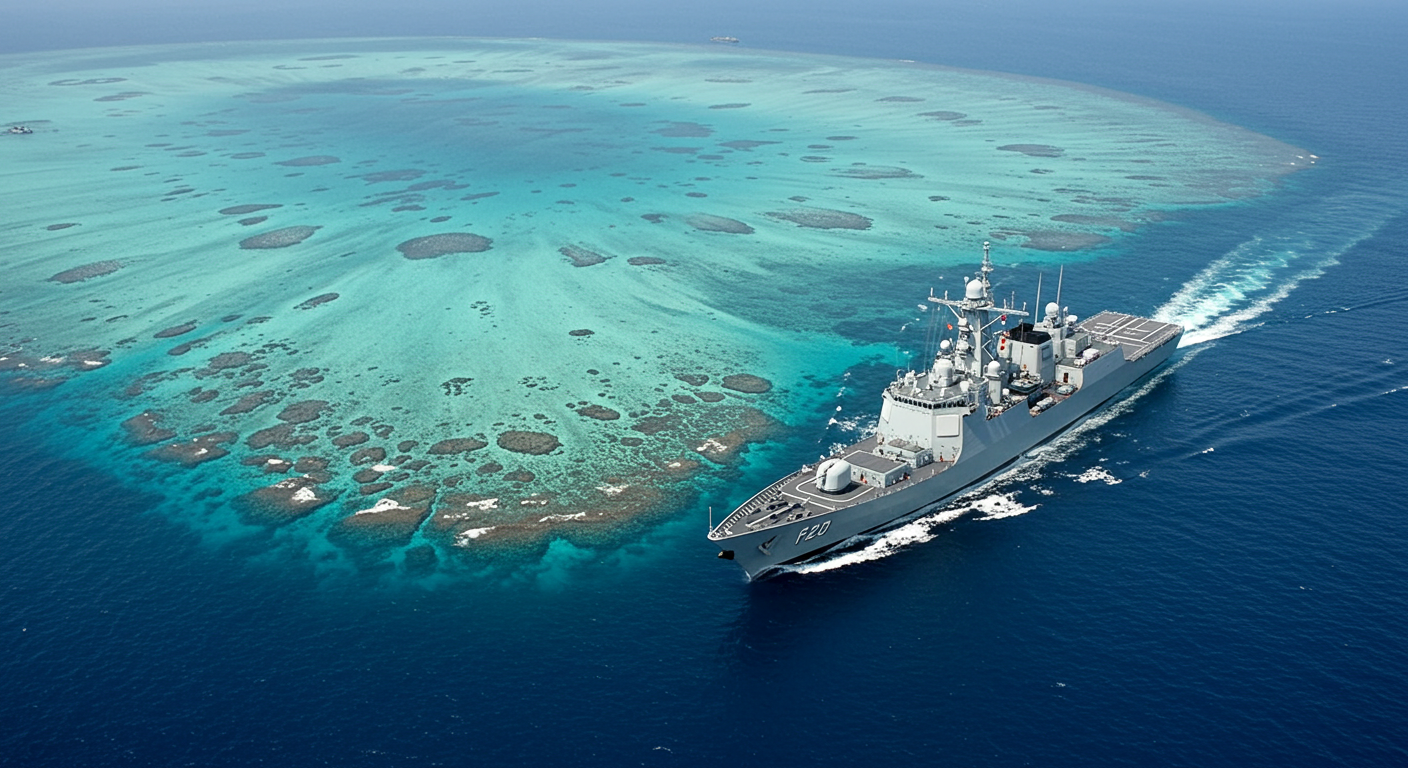
"cultural connections shape specific policies across the Pacific Islands"
At the policy level, these identities manifest in concrete ways. The U.S. Navy conducts freedom of navigation operations through the Taiwan Strait. China's maritime patrol ships operate alongside its fishing fleets near the coveted Spratly Islands. France, through its overseas territories in New Caledonia, ʻUvea and Futuna, and French Polynesia, maintains small naval bases while participating in regional environmental agreements. Meanwhile, Aotearoa deploys patrol vessels to combat illegal fishing in Pacific waters. In Fiji's waters, conservation officers monitor marine protected areas.
Pacific Island nations structure their approach differently. When Papua New Guinea discovered cocaine in black duffel bags near Budi Budi Island in 2019, it highlighted limitations in maritime surveillance and international cooperation on transborder crime. Rather than pursuing military solutions, PNG strengthened cooperation with Australian maritime law enforcement and regional programs such as the Pacific Transnational Crime Network program of the Pacific Island Chiefs of Police organization. Similarly, Fiji addresses illegal fishing through regional partnerships rather than expanding its naval forces.
These contrasting approaches play out in specific incidents, such as in 2023, where multiple Pacific nations collaborated to track a Chinese research vessel moving through their waters. While China framed the mission as scientific research, island states coordinated to monitor potential impacts on marine resources. This exemplifies how Pacific nations leverage regional frameworks to address maritime challenges.
In our work as translators, we notice that the language of maritime security varies across the Asia-Pacific. China's 2021 Coast Guard Law authorizes the use of force to defend maritime claims. In contrast, Pacific Island declarations emphasize "ocean stewardship" and "blue prosperity." Australia's 2020 Maritime Security Strategy tries to bridge these perspectives, addressing both military threats and environmental protection.
Technology adoption reflects similar patterns, with nations like Australia deploying sophisticated aerial surveillance to monitor its northern approaches. Papua New Guinea, with more limited resources, relies on partnerships with the U.S. Coast Guard and Australian Border Force for maritime domain awareness. Fiji uses satellite monitoring to track fishing vessels but depends on regional cooperation for enforcement.
We like to think that cultural connections shape specific policies across the Pacific Islands. When Fiji proposed a moratorium on deep-sea mining in 2019, it cited traditional connections to ocean resources. Similarly, PNG's approach to maritime boundaries accounts for traditional fishing grounds used by coastal communities. These cultural factors influence how Pacific nations engage with larger maritime security frameworks.
Climate impacts manifest in tangible ways, such as during the 2022 volcanic eruption in Tonga that snapped the undersea Internet cable and highlighted infrastructure vulnerabilities. Fiji contends with cyclones that affect its maritime commerce. These experiences drive Pacific Island emphasis on environmental security over military capabilities.
And the practical implications appear in everyday operations. While the U.S. Seventh Fleet patrols with aircraft carriers, Pacific Island nations coordinate fisheries surveillance through the Forum Fisheries Agency. When Australia conducts naval exercises, Pacific states focus on coast guard cooperation and environmental monitoring.
For language specialists working across these contexts, the distinctions matter. While a meeting between Pacific Island leaders might emphasize traditional marine management practices, a U.S.-led security dialogue typically focuses on military cooperation. So, understanding these concepts helps translate cross-cultural communications about maritime security.
Indeed, the recent events illustrate these dynamics. The 2023 U.S.-PNG Defense Cooperation Agreement sparked regional discussions about balancing military partnerships with environmental priorities. Similarly, Pacific responses to China's maritime expansion consistently emphasize resource protection over military deterrence.
These noticeable patterns suggest how different maritime approaches might evolve. As climate impacts intensify, Pacific Island frameworks for ocean governance could inform broader regional approaches. Their experience balancing environmental protection with maritime security may be a winning recipe for addressing future challenges.
These contrasting approaches play out in specific incidents, such as in 2023, where multiple Pacific nations collaborated to track a Chinese research vessel moving through their waters. While China framed the mission as scientific research, island states coordinated to monitor potential impacts on marine resources. This exemplifies how Pacific nations leverage regional frameworks to address maritime challenges.
In our work as translators, we notice that the language of maritime security varies across the Asia-Pacific. China's 2021 Coast Guard Law authorizes the use of force to defend maritime claims. In contrast, Pacific Island declarations emphasize "ocean stewardship" and "blue prosperity." Australia's 2020 Maritime Security Strategy tries to bridge these perspectives, addressing both military threats and environmental protection.
Technology adoption reflects similar patterns, with nations like Australia deploying sophisticated aerial surveillance to monitor its northern approaches. Papua New Guinea, with more limited resources, relies on partnerships with the U.S. Coast Guard and Australian Border Force for maritime domain awareness. Fiji uses satellite monitoring to track fishing vessels but depends on regional cooperation for enforcement.
We like to think that cultural connections shape specific policies across the Pacific Islands. When Fiji proposed a moratorium on deep-sea mining in 2019, it cited traditional connections to ocean resources. Similarly, PNG's approach to maritime boundaries accounts for traditional fishing grounds used by coastal communities. These cultural factors influence how Pacific nations engage with larger maritime security frameworks.
Climate impacts manifest in tangible ways, such as during the 2022 volcanic eruption in Tonga that snapped the undersea Internet cable and highlighted infrastructure vulnerabilities. Fiji contends with cyclones that affect its maritime commerce. These experiences drive Pacific Island emphasis on environmental security over military capabilities.
And the practical implications appear in everyday operations. While the U.S. Seventh Fleet patrols with aircraft carriers, Pacific Island nations coordinate fisheries surveillance through the Forum Fisheries Agency. When Australia conducts naval exercises, Pacific states focus on coast guard cooperation and environmental monitoring.
For language specialists working across these contexts, the distinctions matter. While a meeting between Pacific Island leaders might emphasize traditional marine management practices, a U.S.-led security dialogue typically focuses on military cooperation. So, understanding these concepts helps translate cross-cultural communications about maritime security.
Indeed, the recent events illustrate these dynamics. The 2023 U.S.-PNG Defense Cooperation Agreement sparked regional discussions about balancing military partnerships with environmental priorities. Similarly, Pacific responses to China's maritime expansion consistently emphasize resource protection over military deterrence.
These noticeable patterns suggest how different maritime approaches might evolve. As climate impacts intensify, Pacific Island frameworks for ocean governance could inform broader regional approaches. Their experience balancing environmental protection with maritime security may be a winning recipe for addressing future challenges.

Huri Translations
Tel. +689 89 205 483
[email protected]
PO BOX 365 Maharepa
98728 Mo'orea
French Polynesia
N°TAHITI 876649


Social