Maximizing Your PALM Investment: Communication Strategies for Australian Businesses
The Pacific Australia Labour Mobility (PALM) scheme provides Australian businesses a method to address labour shortages, particularly in sectors needing unskilled to semi-skilled workers; concurrently, it furnishes Pacific Island and Timorese nationals with employment and economic advancement. For Australian enterprises, using the PALM scheme requires an understanding of its operational demands and a commitment to worker welfare and productivity.
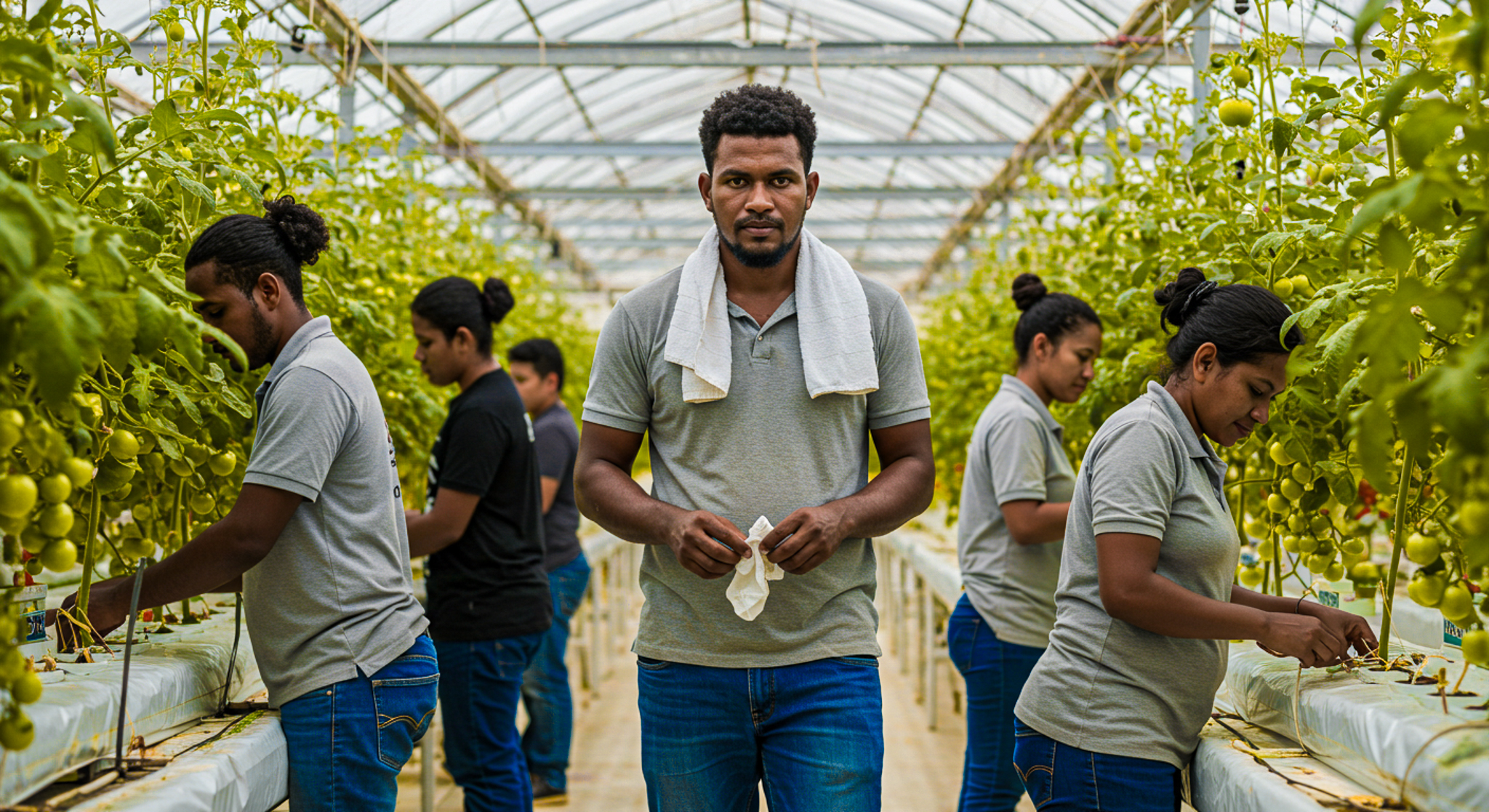
"a strategic investment in the success of an employer's PALM scheme engagement"
This article outlines key considerations for Australian companies engaging with the PALM scheme as it focuses on strategic process management and the understated yet pivotal role of specialised language services in ensuring successful outcomes of the scheme.
Success within the PALM scheme, it should be noted, depends on diligent adherence to its established framework, managed primarily through the Pacific Australia Labour Mobility Information System (PALMIS). This digital platform is the main interface for approved employers, to streamline workflows between businesses, Labour Sending Units (LSUs) in participating countries, and the Department of Employment and Workplace Relations (DEWR). The initial step for employers, therefore, is the submission of a comprehensive recruitment plan via the PALMIS Approved Employer (AE) portal. This requires detailing labour market testing efforts, drafting Offers of Employment (OOEs), outlining robust welfare and wellbeing plans, and specifying accommodation and pay arrangements. DEWR assesses these plans, with a guideline lodgement timeframe of at least eight weeks prior to the anticipated arrival of the workers.
Furthermore, the PALMIS system also supports direct communication with the In-Country Recruitment Database (IRD) of the LSU, which allows employers to follow up on candidate shortlists and other recruitment facets. Recent PALMIS updates for example, have enhanced features in the AE portal, including refined incident reporting types and updates to the recruitment application declaration to include welfare and wellbeing plan obligations.
Once workers are selected and have accepted their OOEs, employers then initiate the visa lodgement process. While PALMIS is used to record Health Assessment Portal (HAP) IDs and Immi transaction reference numbers, the actual visa application must be completed through the Department of Home Affairs' website. Maintaining accurate records in PALMIS alongside the official application is thus a key administrative task. Following this, employers are responsible for planning worker arrivals and departures through the AE portal. This includes creating mobilisation plans for each worksite, assigning workers, and coordinating travel logistics with the relevant LSU.
Once workers are selected and have accepted their OOEs, employers then initiate the visa lodgement process. While PALMIS is used to record Health Assessment Portal (HAP) IDs and Immi transaction reference numbers, the actual visa application must be completed through the Department of Home Affairs' website. Maintaining accurate records in PALMIS alongside the official application is thus a key administrative task. Following this, employers are responsible for planning worker arrivals and departures through the AE portal. This includes creating mobilisation plans for each worksite, assigning workers, and coordinating travel logistics with the relevant LSU.
Post-arrival, employers must conduct and report on arrival briefings and workplace inductions, including noting the invitation and attendance of union and Fair Work Ombudsman (FWO) representatives. Confirming arrivals (and any non-arrivals) within stipulated periods (e.g., within 14 days) is also mandatory. Similarly, departure processes mirror this, and require forward planning for travel and system-based confirmations. It is also important to recognise that the PALM scheme is not static. Employers can request changes to approved recruitment plans, which may necessitate further approvals.
Worker welfare remains a constant and requires employers to have documented welfare plans and accessible support contacts for each placement group. Indeed, the scheme, currently supporting over 30,000 workers across Australia, has undergone reforms aimed at safeguarding worker interests, such as ensuring pay parity with Australian counterparts and mandating a minimum 30-hour workweek. These are foundations for a stable and productive workforce.
Turning to the workforce itself, for individuals from Pacific nations, the PALM scheme often represents a substantial life-altering opportunity. With unemployment or underemployment being a reality in some home countries, even for those with formal qualifications, the scheme allows them to earn a reliable income, gain new skills, and materially support their families and communities. Reports indicate workers using their earnings to improve housing, fund education, invest in local businesses, and enhance overall living standards. And the demand is considerable: At one point, it was reported that 42,000 Fijians were registered and awaiting opportunities through the scheme.
Turning to the workforce itself, for individuals from Pacific nations, the PALM scheme often represents a substantial life-altering opportunity. With unemployment or underemployment being a reality in some home countries, even for those with formal qualifications, the scheme allows them to earn a reliable income, gain new skills, and materially support their families and communities. Reports indicate workers using their earnings to improve housing, fund education, invest in local businesses, and enhance overall living standards. And the demand is considerable: At one point, it was reported that 42,000 Fijians were registered and awaiting opportunities through the scheme.
While the economic benefits are apparent, employers carry a responsibility to ensure the wellbeing of their PALM scheme employees. Past experiences with other agricultural visa programmes sometimes showed risks of exploitation. The PALM scheme's design, however, with its emphasis on oversight, minimum conditions, and requirements for welfare plans, seeks to provide a more secure and equitable environment. Pay parity, for instance, ensures that as workers upskill, their remuneration reflects their growing experience in line with Australian industry standards.
The scheme's scale is also noteworthy: One recruitment agency alone, RWM, successfully placed thousands of workers from nine Pacific countries and Timor-Leste into roles across sectors like meat processing, food production, and horticulture since April 2022. Worker contracts, initially for three years in 2022, were extended to four years in June 2023, which signaled a move towards fostering longer-term employment relationships.
In any business operation, particularly one involving international stakeholders, proficient communication is a cornerstone of efficiency and risk management. Within the PALM scheme, where participants come from many distinct linguistic backgrounds, the imperative for understanding is magnified. Several key touchpoints illustrate where linguistic understanding is non-negotiable. Firstly, the Offer of Employment: Employers are required to provide detailed, individualised OOEs covering terms of employment, arrival arrangements, welfare support, workplace specifics, and more. For a worker whose first language is not English, digesting this comprehensive legal document without professional translation can lead to misunderstandings about their rights and obligations, which in turn can entail future HR challenges.
In any business operation, particularly one involving international stakeholders, proficient communication is a cornerstone of efficiency and risk management. Within the PALM scheme, where participants come from many distinct linguistic backgrounds, the imperative for understanding is magnified. Several key touchpoints illustrate where linguistic understanding is non-negotiable. Firstly, the Offer of Employment: Employers are required to provide detailed, individualised OOEs covering terms of employment, arrival arrangements, welfare support, workplace specifics, and more. For a worker whose first language is not English, digesting this comprehensive legal document without professional translation can lead to misunderstandings about their rights and obligations, which in turn can entail future HR challenges.
Arrival briefings and inductions are another such juncture. These sessions are designed to impart information on workplace health and safety, employee rights, and company policies. The efficacy of these briefings is directly tied to the workers' comprehension, which can be hampered if delivered solely in English to a multilingual audience. Moreover, effectively communicating the availability and accessibility of support mechanisms is fundamental. Cultural aspects can also affect how support is perceived and sought, making culturally attuned communication quite pertinent. Day-to-day operations and training also depend on understood instructions for productivity and safety. Misinterpretations due to communication differences can impact performance and may lead to workplace incidents. Addressing these potential communication disconnects proactively is, therefore, sound practice. It's a strategic investment in the success of an employer's PALM scheme engagement. This is precisely where the expertise of a specialised language service provider becomes beneficial.
Huri Translations specialises in Pacific Island languages, and provides services designed to support Australian businesses in their engagement with PALM scheme workers. Our approach is to facilitate seamless and accurate information exchange, to ensure that all parties have a proper understanding of their roles, responsibilities, and the opportunities available. Specifically, we can assist Australian companies by translating key documentation, such as Offers of Employment, accommodation agreements, payslip explanations, workplace policies, and health and safety materials so that workers are fully informed.
Huri Translations specialises in Pacific Island languages, and provides services designed to support Australian businesses in their engagement with PALM scheme workers. Our approach is to facilitate seamless and accurate information exchange, to ensure that all parties have a proper understanding of their roles, responsibilities, and the opportunities available. Specifically, we can assist Australian companies by translating key documentation, such as Offers of Employment, accommodation agreements, payslip explanations, workplace policies, and health and safety materials so that workers are fully informed.
Furthermore, we assist in the communication of welfare and wellbeing support services to make sure workers know how and when to access help. Our objective is to act as a backstage but helpful enabler that help businesses mitigate risks associated with miscommunication, enhance worker understanding and satisfaction, and ultimately improve the operational smoothness of their PALM scheme participation.
In conclusion, labour mobility initiatives like the PALM scheme are important for addressing Australia's evolving workforce needs while contributing to economic development in the Pacific region. The long-term sustainability and mutual benefit derived from such programmes depend on robust governance, a genuine commitment to worker welfare, and an unwavering focus on transparent, understood communication.
In conclusion, labour mobility initiatives like the PALM scheme are important for addressing Australia's evolving workforce needs while contributing to economic development in the Pacific region. The long-term sustainability and mutual benefit derived from such programmes depend on robust governance, a genuine commitment to worker welfare, and an unwavering focus on transparent, understood communication.
As Australian businesses increasingly look to the PALM scheme, recognising the strategic advantage conferred by culturally good multilingual communication will be a key differentiator. Investing in overcoming communication difficulties is an investment in a more productive, compliant, and harmonious working environment for everyone. Loking ahead, the scheme will undoubtedly see further refinements, but the foundational need for mutual understanding will always be at the core, so as to promote fruitful and enduring partnerships.

Huri Translations
Tel. +689 89 205 483
[email protected]
PO BOX 365 Maharepa
98728 Mo'orea
French Polynesia
N°TAHITI 876649


Social