A healthier road for Pacific Communities through Civic Engagement
When Native Hawaiian mothers gather for prenatal checkups at community health centers, they bring with them the force of decades of political organizing. Their presence reflects individual health needs and a longer story of how Pacific Islander communities have mobilized for better healthcare through community action.
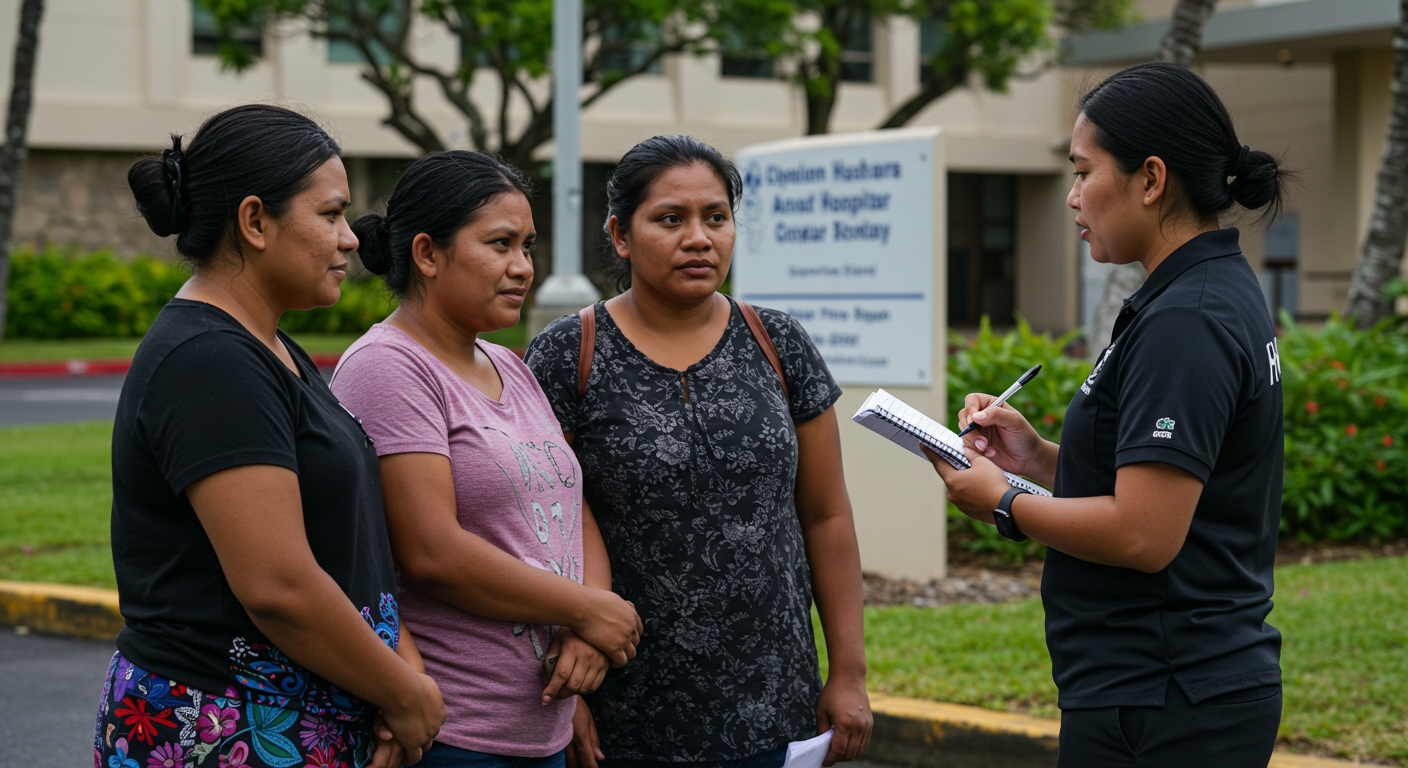
"the most promising route to addressing persistent health disparities among our peers"
Since the 1960s, Native Hawaiian and Pacific Islander (NHOPI) communities have developed what political scientists call "participatory democracy" - direct involvement in decisions affecting their lives. This activism has shaped everything from education to healthcare access, notably in addressing conditions like gestational diabetes mellitus (GDM), which affects about 18% of NHOPI individuals compared to 9% of white populations.
The political landscape of the 1970s saw NHOPI communities organizing alongside other minority groups for civil rights and better public services. As one political movement gained ground, it often strengthened others. Healthcare advocacy grew alongside demands for voting rights and educational access. These movements demonstrated how civic engagement could improve community wellbeing.
Meanwhile, the healthcare system began documenting significant variations in health outcomes. Studies show that NHOPI communities face distinct challenges in managing conditions like GDM. The statistics parallel patterns of political representation: Areas with stronger NHOPI political participation often report better health resources and culturally appropriate care.
The 1980s and 1990s brought new forms of community organizing. NHOPI groups moved beyond traditional political channels, forming healthcare coalitions and wellness initiatives. This period saw the rise of what scholars call "social capital": Networks of community trust and cooperation that improve public health outcomes.
Political scientists argue that NHOPI voter turnout has fluctuated over recent decades, much like access to quality healthcare. When communities actively participate in local governance, they tend to secure better health services. For instance, areas with high NHOPI voter engagement often report more funding for community health centers and cultural competency training for medical staff.
The relationship between political voice and health equity becomes clear in pregnancy care. NHOPI communities that maintain strong political organization tend to have better prenatal services. These areas often report more culturally appropriate diabetes education programs and stronger support networks for expectant mothers.
Young NHOPI voters show increasing interest in both political participation and health advocacy. This generation brings new energy to longstanding issues, using social media and traditional organizing methods to advocate for better healthcare. Their approach combines respect for cultural practices with demands for modern medical resources.
As healthcare translators, weʻve witnessed with our NHOPI partners that political participation and health outcomes remain deeply connected. NHOPI communities that maintain strong political organization often secure better healthcare resources. Whether it is about providing Marshallese or Chuukese patients with surveys, or assisting CHamorro or Palauan social workers with multilingual leaflets, this pattern holds true across different regions and healthcare systems.
Looking forward, the path to better health outcomes clearly runs through civic engagement. As NHOPI communities continue building political power, they strengthen their ability to advocate for culturally appropriate healthcare. This dual approach - political participation and health advocacy - offers the most promising route to addressing persistent health disparities among our peers.
The teachings learned from decades of NHOPI political organizing and healthcare advocacy point to one conclusion: lasting improvements in community health require sustained civic engagement. As these communities continue raising their political voice, they create new possibilities for health equity and cultural respect in medical care settings.
Meanwhile, the healthcare system began documenting significant variations in health outcomes. Studies show that NHOPI communities face distinct challenges in managing conditions like GDM. The statistics parallel patterns of political representation: Areas with stronger NHOPI political participation often report better health resources and culturally appropriate care.
The 1980s and 1990s brought new forms of community organizing. NHOPI groups moved beyond traditional political channels, forming healthcare coalitions and wellness initiatives. This period saw the rise of what scholars call "social capital": Networks of community trust and cooperation that improve public health outcomes.
Political scientists argue that NHOPI voter turnout has fluctuated over recent decades, much like access to quality healthcare. When communities actively participate in local governance, they tend to secure better health services. For instance, areas with high NHOPI voter engagement often report more funding for community health centers and cultural competency training for medical staff.
The relationship between political voice and health equity becomes clear in pregnancy care. NHOPI communities that maintain strong political organization tend to have better prenatal services. These areas often report more culturally appropriate diabetes education programs and stronger support networks for expectant mothers.
Young NHOPI voters show increasing interest in both political participation and health advocacy. This generation brings new energy to longstanding issues, using social media and traditional organizing methods to advocate for better healthcare. Their approach combines respect for cultural practices with demands for modern medical resources.
As healthcare translators, weʻve witnessed with our NHOPI partners that political participation and health outcomes remain deeply connected. NHOPI communities that maintain strong political organization often secure better healthcare resources. Whether it is about providing Marshallese or Chuukese patients with surveys, or assisting CHamorro or Palauan social workers with multilingual leaflets, this pattern holds true across different regions and healthcare systems.
Looking forward, the path to better health outcomes clearly runs through civic engagement. As NHOPI communities continue building political power, they strengthen their ability to advocate for culturally appropriate healthcare. This dual approach - political participation and health advocacy - offers the most promising route to addressing persistent health disparities among our peers.
The teachings learned from decades of NHOPI political organizing and healthcare advocacy point to one conclusion: lasting improvements in community health require sustained civic engagement. As these communities continue raising their political voice, they create new possibilities for health equity and cultural respect in medical care settings.

Huri Translations
Tel. +689 89 205 483
[email protected]
PO BOX 365 Maharepa
98728 Mo'orea
French Polynesia
N°TAHITI 876649


Social