Engineering Paradise: What Can 3,500 Years of Pacific Island Adaptation Reveal?
Contemporary narratives often highlight the environmental jeopardy facing island communities due to climate change, sea-level rise, and ecological shifts. However, these struggles overlay millennia of human adaptation and persistence in island settings. As a company focused on Pacific linguistic heritage, we recognize the deep connection between language, culture, and this capacity for resilience. Exploring this enduring history offers valuable perspectives for navigating present challenges and shaping the future.
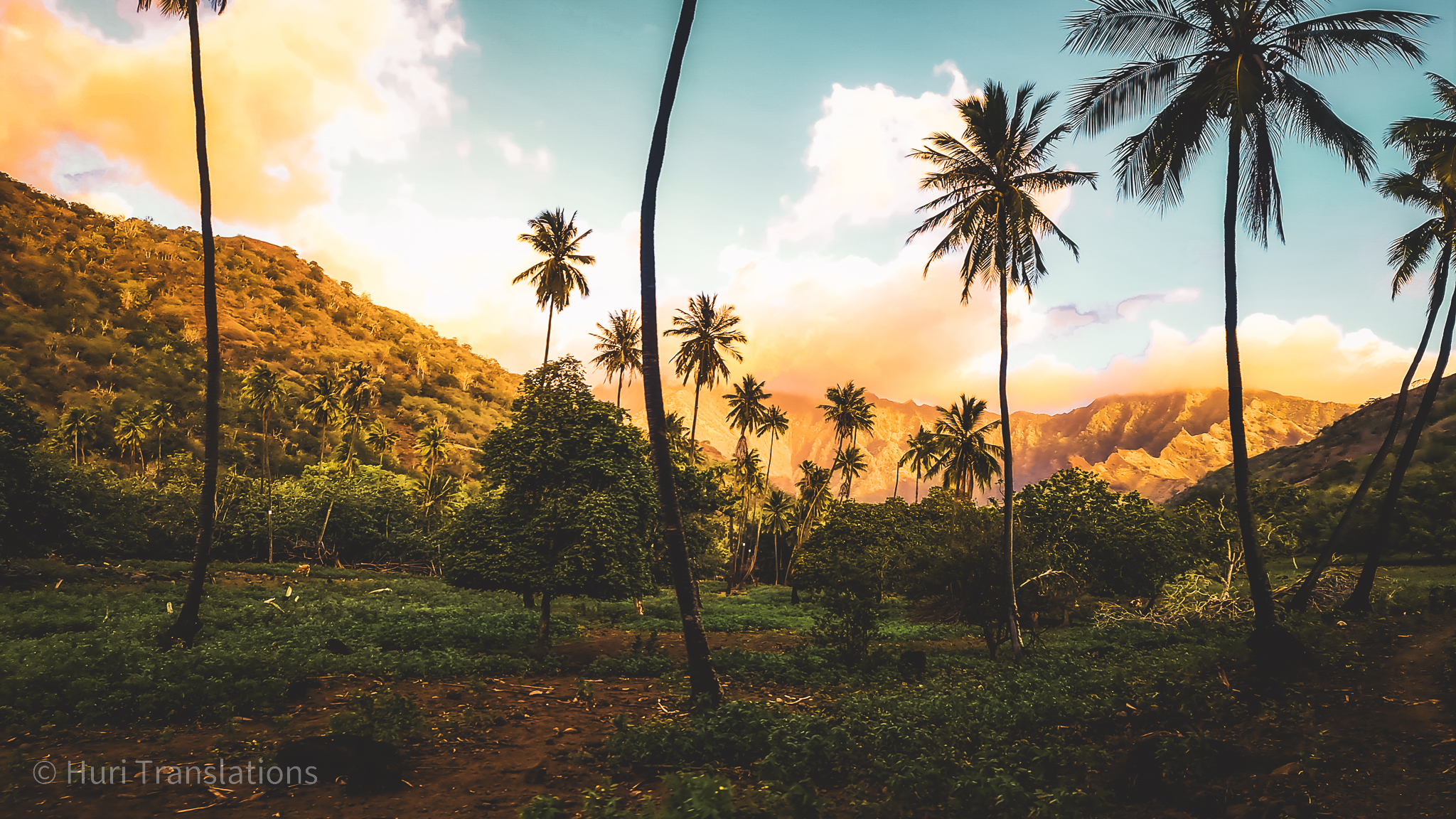
"The chronicles of Pacific islands, etched in stone, soil, and memory, offer more than cautionary tales: They provide narratives of great resilience"
The peopling of the Pacific Ocean is one of humanity’s great sagas of exploration and settlement, as humans acquired exceptional voyaging skills and environmental knowledge. Archaeological findings, combined with linguistic and genetic trails, sketch pathways taken thousands of years ago. Settlement unfolded across Remote Oceania beginning roughly 3,500 to 3,300 years before present (B.P.), often progressing along distinct southern and northern routes. For a long time, it was thought certain island groups, like the high volcanic islands of Pohnpei and Kosrae in Micronesia, were settled much later, perhaps only around 2,000 B.P., concurrently with low-lying equatorial atolls like the Kiribati. This perceived delay was puzzling, as these fertile high islands seemed desirable targets long before evidence suggested occupation.
However, the ground beneath our historical understanding can shift. Recent geological studies using mangrove sediments on Pohnpei and Kosrae challenge the long-held assumption of falling sea levels in this specific region during the late Holocene. Instead of the expected fall from a mid-Holocene highstand seen elsewhere in the Pacific, these islands experienced a steady relative sea-level rise of approximately 14 feet over the last 5,700 years, likely driven by localized island subsidence. This subsidence, outpacing regional sea-level trends, means that coastlines from the time of initial Pacific migrations now lie submerged. Consequently, the archaeological evidence for the earliest settlements might simply be underwater, skewing our perception of when people first arrived. This possibility invites a re-evaluation of migration timelines and the interactions between early voyaging groups. The story is not necessarily one of late arrival, but perhaps of evidence lost to a slowly rising sea. This deep-time perspective, exemplified also by the 13,000-year history of the Chumash people on California's Channel Islands, underscores that human occupation of islands often represents long-term success against environmental flux.
Island societies did not exist within their environments; they actively shaped them. This long history of human-environment interaction shows a mixed record. On one hand, the arrival of humans, often accompanied by transported landscapes of non-native plants and animals, frequently led to significant ecological changes. Forest clearing for agriculture, erosion, habitat alteration, and impacts on endemic species through predation or competition are documented on islands globally. The introduction of rats to Rapa Nui, for instance, likely played a substantial role in the demise of the island's palms, a factor previously underestimated in narratives focused solely on human profligacy. Similarly, archaeological data from California's Channel Islands show millennia-long trends of decreasing sizes in harvested shellfish like abalone and mussels, alongside evidence for the introduction of dogs and foxes possibly impacting native fauna. The extinction of the flightless sea duck Chendytes lawi around 2,400 years ago likely resulted from a combination of human hunting and habitat pressures.
Yet, this narrative of impact is incomplete without acknowledging the concurrent story of management, adaptation, and long-term viability. The very persistence of Indigenous populations on islands for centuries or millennia, often until European contact, speaks volumes about their capacity for resilience. Rather than universal ecological collapse, the finer picture often reveals astute adjustments and resource management strategies. On the Channel Islands, the Chumash managed terrestrial landscapes through controlled burning to enhance the productivity of grasslands rich in edible geophytes like blue dicks, a type of Indian potato and seed-bearing plants, which provided a reliable source of carbohydrates for over 11,500 years. They may have also actively managed marine ecosystems, periodically culling sea otter populations to boost the abundance of valuable shellfish like red abalone.
In the Pacific, engineered solutions like the construction of artificial islets, such as those in the Langalanga lagoon of Malaita or the monumental centers of Nan Madol (Pohnpei) and Leluh (Kosrae) are testament to long-standing traditions of altering land and seascapes. While motivations likely included defense, population expansion, and consolidating power, these constructions show local knowledge and capability. Stone-walled tidal fish weirs found across the Pacific also point to an early intensification of fisheries and sophisticated marine resource management, a practice clearly linking Austronesian-speaking communities. Similarly, extensive agricultural ditch systems in Sāmoa, massive labor investments over nearly 3,000 years, showcase strategies for managing water, enhancing productivity, and sustaining dense populations on high volcanic islands. These examples counter simplistic narratives, revealing societies actively engineering their environments for long-term sustenance.
The revelation that Nan Madol and Leluh were likely constructed when local sea level was significantly lower radically alters their interpretation. These monumental centers, often dubbed the Venice of the Pacific, were probably not initially built as islets separated by seawater canals, as commonly perceived. Instead, they were likely terrestrial complexes gradually inundated by subsidence-driven relative sea-level rise, with the iconic canals forming over time.
Island societies did not exist within their environments; they actively shaped them. This long history of human-environment interaction shows a mixed record. On one hand, the arrival of humans, often accompanied by transported landscapes of non-native plants and animals, frequently led to significant ecological changes. Forest clearing for agriculture, erosion, habitat alteration, and impacts on endemic species through predation or competition are documented on islands globally. The introduction of rats to Rapa Nui, for instance, likely played a substantial role in the demise of the island's palms, a factor previously underestimated in narratives focused solely on human profligacy. Similarly, archaeological data from California's Channel Islands show millennia-long trends of decreasing sizes in harvested shellfish like abalone and mussels, alongside evidence for the introduction of dogs and foxes possibly impacting native fauna. The extinction of the flightless sea duck Chendytes lawi around 2,400 years ago likely resulted from a combination of human hunting and habitat pressures.
Yet, this narrative of impact is incomplete without acknowledging the concurrent story of management, adaptation, and long-term viability. The very persistence of Indigenous populations on islands for centuries or millennia, often until European contact, speaks volumes about their capacity for resilience. Rather than universal ecological collapse, the finer picture often reveals astute adjustments and resource management strategies. On the Channel Islands, the Chumash managed terrestrial landscapes through controlled burning to enhance the productivity of grasslands rich in edible geophytes like blue dicks, a type of Indian potato and seed-bearing plants, which provided a reliable source of carbohydrates for over 11,500 years. They may have also actively managed marine ecosystems, periodically culling sea otter populations to boost the abundance of valuable shellfish like red abalone.
In the Pacific, engineered solutions like the construction of artificial islets, such as those in the Langalanga lagoon of Malaita or the monumental centers of Nan Madol (Pohnpei) and Leluh (Kosrae) are testament to long-standing traditions of altering land and seascapes. While motivations likely included defense, population expansion, and consolidating power, these constructions show local knowledge and capability. Stone-walled tidal fish weirs found across the Pacific also point to an early intensification of fisheries and sophisticated marine resource management, a practice clearly linking Austronesian-speaking communities. Similarly, extensive agricultural ditch systems in Sāmoa, massive labor investments over nearly 3,000 years, showcase strategies for managing water, enhancing productivity, and sustaining dense populations on high volcanic islands. These examples counter simplistic narratives, revealing societies actively engineering their environments for long-term sustenance.
The revelation that Nan Madol and Leluh were likely constructed when local sea level was significantly lower radically alters their interpretation. These monumental centers, often dubbed the Venice of the Pacific, were probably not initially built as islets separated by seawater canals, as commonly perceived. Instead, they were likely terrestrial complexes gradually inundated by subsidence-driven relative sea-level rise, with the iconic canals forming over time.
Contemporary discussions about responding to sea-level rise in the Pacific often focus on externally driven, high-technology solutions or planned relocation. Proposals for futuristic floating cities or building artificial islands using advanced engineering have garnered attention and even governmental interest. Similarly, relocation schemes, such as Kiribati's purchase of land in Fiji, have been presented as pragmatic responses to the threat of inundation. However, these modern solutions frequently overlook or marginalize local knowledge and historical precedents.
Pacific Islanders have a long history of constructing artificial land and adapting to coastal change using local materials and methods, as seen in Malaita. Furthermore, relocation itself is not new. I-Kiribati, for instance, have historical experience with resettlement both within and outside their nation. Yet, modern, top-down relocation plans can be fraught with complications, which can create new social and cultural challenges for the relocated population and host communities, as illustrated by the complexities surrounding the Fiji land purchase involving pre-existing residents and questions about the land's suitability. Such plans often lack adequate community consultation and agency for those most affected. Ignoring the deep wellspring of Indigenous knowledge, historical adaptation strategies, and community perspectives risks implementing solutions that are not only costly and ineffective but also culturally dissonant.
The chronicles of Pacific islands, etched in stone, soil, and memory, offer more than cautionary tales: They provide narratives of great resilience. From the monumental engineering feats of Pohnpei and Kosrae, now understood through the lens of a rising sea, to the millennia-long sustainable practices of the Chumash, island peoples show a remarkable capacity to adapt, innovate, and persist through dramatic environmental shifts. Their histories challenge us to look beyond simplistic narratives of collapse or victimhood.
Understanding the past holds relevance for contemporary conservation, restoration, and climate adaptation efforts. Reviving or strengthening traditional practices, informed by archaeological and historical ecological insights, can support ecological health and cultural continuity. The ongoing recovery witnessed on islands like Tuqan after periods of intense historical degradation shows that even severely impacted ecosystems possess a capacity for renewal.

Huri Translations
Tel. +689 89 205 483
[email protected]
PO BOX 365 Maharepa
98728 Mo'orea
French Polynesia
N°TAHITI 876649


Social