At the Crossroads of Fossil Fuel Dependency and Renewable Energy
The global energy landscape is witnessing significant shifts as countries maneuver between the tensions in fossil fuel dependency and renewable energy adoption. While recent U.S. policy developments prioritize increased domestic petroleum production, Pacific Island nations are charting a different course toward renewable energy systems that could reduce their reliance on imported fossil fuels.
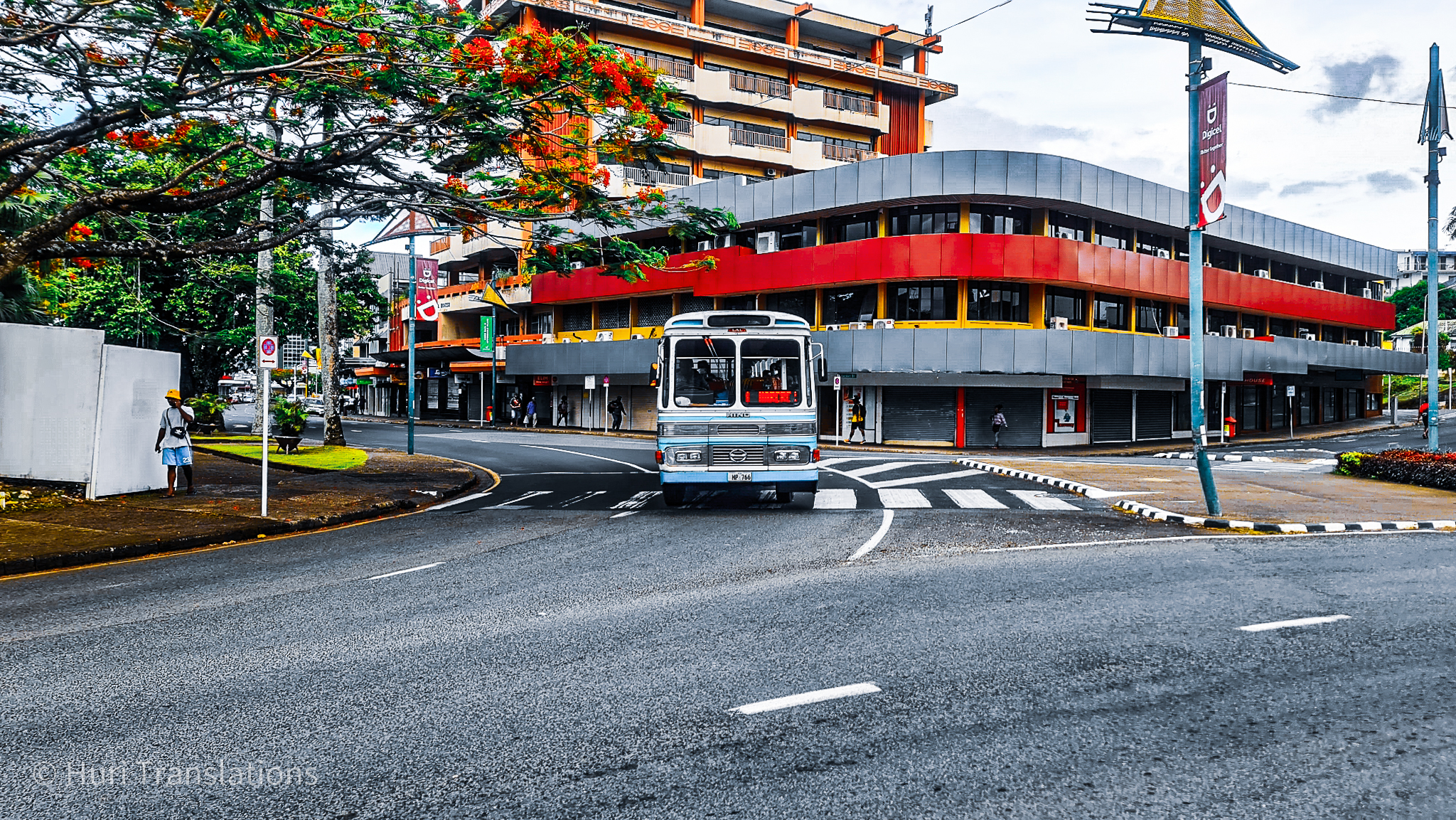
"Pacific Island nations find themselves at a crossroads in the field of energy production"
Divergent Energy Pathways
The April 2025 US Executive Order "Protecting American Energy from State Overreach" emphasizes American "energy dominance" through the removal of "illegitimate impediments" to domestic energy resources — particularly oil, natural gas, and coal. The order positions state climate policies as threats to national security and economic well-being, directing the Attorney General to identify and challenge state laws addressing climate change or carbon emissions.
The April 2025 US Executive Order "Protecting American Energy from State Overreach" emphasizes American "energy dominance" through the removal of "illegitimate impediments" to domestic energy resources — particularly oil, natural gas, and coal. The order positions state climate policies as threats to national security and economic well-being, directing the Attorney General to identify and challenge state laws addressing climate change or carbon emissions.
This policy direction stands in contrast to the approach taken by many Pacific Island Countries (PICs), which have set ambitious renewable energy targets despite their current high dependency on fossil fuels. Oil represents approximately 80% of the region's total energy supply, primarily for transportation and electricity generation, with diesel providing around 72% of electricity.
Petroleum Production Trends
The U.S. Energy Information Administration forecasts that worldwide production of petroleum and other liquids will grow by 1.9 million barrels per day (b/d) in 2025 and 1.6 million b/d in 2026. This growth will primarily come from non-OPEC+ countries, with the United States, Guyana, Canada, and Brazil leading the way. The United States continues to dominate global petroleum production, with U.S. crude oil output increasing to 13.2 million b/d in 2024 and expected to rise by 0.6 million b/d in 2025.
Meanwhile, OPEC+ countries maintain production restraint, with their share of global oil production projected to decrease to 46% in 2025 and 2026, down from 53% in 2016. This strategic production management affects global energy markets and pricing, including the cost of imported fuels for Pacific Islands.
The U.S. Energy Information Administration forecasts that worldwide production of petroleum and other liquids will grow by 1.9 million barrels per day (b/d) in 2025 and 1.6 million b/d in 2026. This growth will primarily come from non-OPEC+ countries, with the United States, Guyana, Canada, and Brazil leading the way. The United States continues to dominate global petroleum production, with U.S. crude oil output increasing to 13.2 million b/d in 2024 and expected to rise by 0.6 million b/d in 2025.
Meanwhile, OPEC+ countries maintain production restraint, with their share of global oil production projected to decrease to 46% in 2025 and 2026, down from 53% in 2016. This strategic production management affects global energy markets and pricing, including the cost of imported fuels for Pacific Islands.
Pacific Islands' Energy Challenges
Working with Pacific Island languages allows us a particular vantage point from which to appreciate the latest energy developments in the region. Pacific Island nations face energy challenges due to their geography, economy, and environmental vulnerability. Their electricity systems display some of the highest tariffs globally, which reflect the high cost of diesel generation and low economies of scale. In Vanuatu, for example, it was reported that the monthly electricity tariff as of June 2024 was 64.43 Vatu/kWh (0.54 US$/kWh), significantly higher than global averages. Sāmoa came to the limelight recently as it struggled with persistent power outages that also affected deliveries in our translation workflow.
The high cost of imported fossil fuels drives interest in transitioning to renewable energy, which could reduce costs and improve energy security. Many PICs have set ambitious targets of achieving 100% renewable energy by 2030 or earlier, thus positioning themselves as active advocates for energy transition in international climate forums.
Vanuatu's Energy Transition
Vanuatu provides an illustrative example of the renewable energy transition in the Pacific. Its National Energy Roadmap aims for 100% renewable electricity by 2030, prioritizing solar, hydro, and biomass resources due to their availability, lower cost, and potential to create employment.
The island of Efate, which hosts the capital Port Vila, currently has a generation capacity of 22 MW, including 16.8 MW of diesel gensets, 2.45 MWp solar photovoltaic (PV), and 2.47 MW wind. In 2021, 88% of electricity was generated by diesel power plants, 7% by wind, and 5% by solar PV.
Techno-economic analyses suggest that a mix of solar PV and biomass generation combined with battery storage could provide a fully renewable electricity system in Efate at a lower cost than the current diesel-dominated system. Coconut oil (CNO) based electricity generation has shown particular promise, which provided up to 17% of Vanuatu's energy supply back in 2013, though regulatory issues have since reduced its contribution.
Hybrid Energy Systems for Island Contexts
For many Pacific Islands, hybrid energy systems that combine multiple renewable sources with energy storage are a viable path forward. Flinders Island (Australia) and Ometepe Island (Nicaragua) have successfully implemented such systems, drastically reducing diesel dependency while improving energy reliability.
Energy storage plays a varied role depending on the level of renewable integration. In systems with up to 40% intermittent renewable integration, batteries primarily provide grid stability with autonomy below 1 hour. As solar PV integration increases over 85%, storage capacity grows significantly, with battery systems sized to cover over 40% of electricity demand and providing 12+ hours of autonomy.
The size and configuration of these systems vary based on local conditions. On Efate, a system with 81% renewable energy capacity would require about US$17 million in additional investment, while a 100% renewable energy system would cost between US$95-130 million.
Financing Challenges
The capital-intensive nature of renewable energy transitions are great hurdles for Pacific Island nations. The capital cost of new solar PV and Battery Energy Storage Systems (BESS) can be five times higher than current systems.
Vanuatu's economy, like many in the Pacific, relies heavily on aid and personal remittances, which together represented 40% of its US$950 million GDP in 2021. Aid for the energy sector totaled only US$51 million over 14 years, far below what would be needed for a full transition to renewable energy.
Private sector investment offers good prospects. However, regulatory uncertainty can deter potential investors. For example, in Vanuatu, UNELCO's concession expires in 2031 with no certainty of renewal, which limits further investment. Additionally, the role of Independent Power Producers (IPP) within existing concession agreements often remains unclear.
Path Forward
The energy transition in the Pacific Islands will likely require a pragmatic approach that balances renewable integration with dispatchable power sources. Solar PV will be a technology to watch, particularly where hydropower is unavailable and geothermal resources are uncertain and costly to implement.
Cost reductions achieved through fuel savings could result in more affordable electricity for the end consumers, though moderate tariff reductions of around 15% are more realistic than dramatic decreases, as fuel represents only 32-42% of electricity tariffs.
Pacific Island nations find themselves at a crossroads in the field of energy production. On the one hand, increasing global petroleum production could maintain or even reduce the cost of imported fuels in the short term. On the other hand, the long-term economic and environmental benefits of locally generated renewable energy is a path to greater energy independence and resilience. The outcome will depend on their ability to craft regulatory frameworks, secure adequate financing, and implement appropriate technologies based on their insular context.

Huri Translations
Tel. +689 89 205 483
[email protected]
PO BOX 365 Maharepa
98728 Mo'orea
French Polynesia
N°TAHITI 876649


Social